 Làng nghề
 Di tích văn hóa & lịch sử





♦ MSc: Nguyen Van Hoan
Hanoi Institute of International Studies and Training
Over more than a thousand years of history, present-day Ha Noi - formerly Thang Long - has been not only the nation’s political center but also a cradle where Viet Nam’s cultural essence and intellectual brilliance converge and radiate outward. Since King Ly Thai To issued the Royal Edict on the Transfer of the Capital in 1010, Thang Long has become a land celebrated as “dia linh nhan kiet” - a place blessed with auspicious geography and exceptional people - where many eminent figures have been born, nurtured, and honored for their major contributions to politics, the military, education, literature, the arts, science, and modern culture.
Hanoi’s eminent figures are recognized not only in national history but have also left marks that reach beyond the country’s borders. Many of the humanistic and intellectual values established by the talented and virtuous of Thang Long - Ha Noi have become part of humanity’s shared cultural heritage. This is what gives Ha Noi its distinctive stature: a city rich in tradition, yet endowed with resilient cultural vitality across centuries.
Ha Noi as a Converging Space for Talent
In Viet Nam’s history, few cities have maintained a long - lasting and continuous central role like Thang Long - Ha Noi. As the capital of multiple dynasties and the site of key political, educational, and cultural institutions, Ha Noi early became a magnet drawing talent from all regions of the country.
Van Mieu - Quoc Tu Giam, Viet Nam’s first university, built in the 11th century, is a vivid symbol of Thang Long’s tradition of learning and respect for intellectuals. Here, generations of scholars were educated and shaped - cultivating a scholarly spirit closely linked to ethics and social responsibility. That environment helped form, time after time, outstanding intellectuals and eminent figures for the nation.

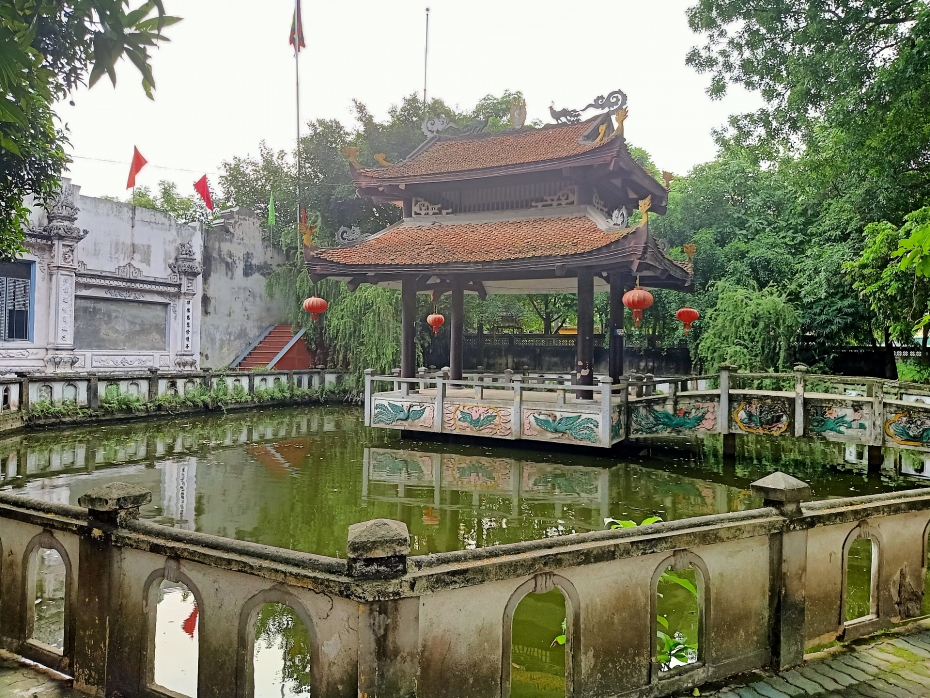
Khue Van Cac - a symbol of Ha Noi
Eminent Figures in Politics and the Military
Throughout the nation’s historical flow, many eminent figures associated with Ha Noi played decisive roles in the cause of building and defending the country. They were not only capable leaders but also major thinkers who left enduring imprints on Viet Nam’s political life and spiritual world.
Nguyen Trai (1380 - 1442) stands as one of the most representative figures. Born and raised in Thang Long’s cultural milieu, he became a prominent politician, thinker, and cultural luminary of the Early Le period. With the idea of “lay dan lam goc” (“the people as the foundation”), Nguyen Trai laid a cornerstone for a benevolent, righteousness - centered concept of national governance. His work Binh Ngo dai cao not only affirmed Dai Viet’s independence but also expressed progressive humanistic thought; UNESCO honored him in 1980 as a global intellectual legacy.
Entering the modern era, Ha Noi maintained an especially close connection with President Ho Chi Minh (1890 - 1969). Although born in Nghe An, it was in Ha Noi that he proclaimed the Declaration of Independence in 1945, giving birth to the Democratic Republic of Viet Nam; Ha Noi was also the most important political center in his revolutionary life. In 1987, UNESCO honored Ho Chi Minh as a Hero of National Liberation and a Great Man of Culture, recognizing his contributions to peace and human progress.
In addition, the history of Thang Long - Ha Noi bears the imprint of outstanding generals such as Tran Hung Dao and Vo Nguyen Giap. Tran Hung Dao symbolizes the military art of the Tran dynasty, with resounding victories against the Nguyen - Mongol forces in the 13th century. General Vo Nguyen Giap, the first general of the Viet Nam People’s Army, was deeply connected to Ha Noi throughout his career and embodied Viet Nam’s military intellect in the 20th century.
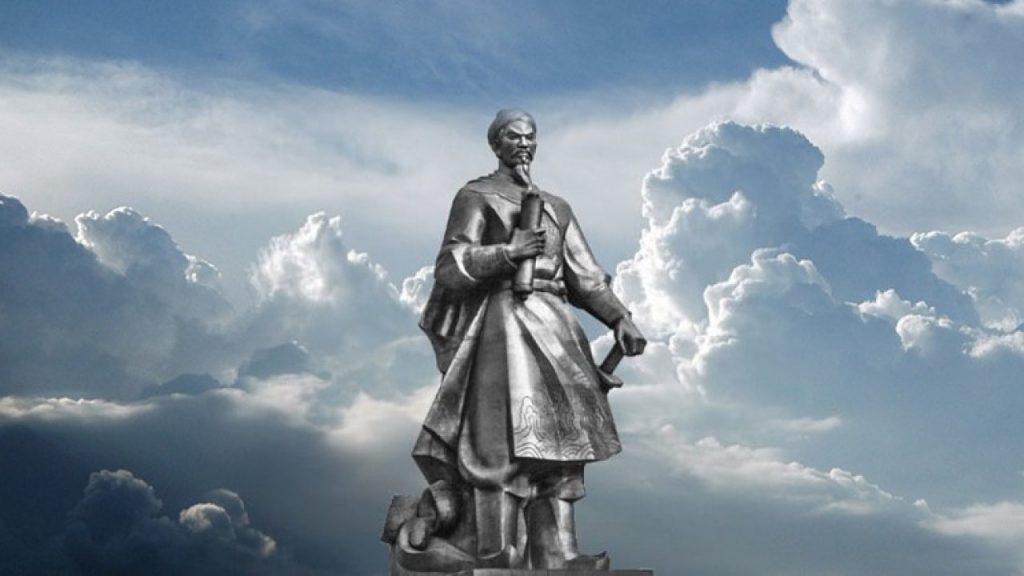
The statue of Tran Hung Dao
Eminent Figures in Education and the Examination Tradition
If politics and military strength safeguard national independence, then education and knowledge form the enduring foundation for a country’s development. In this domain, Hanoi is proud to be associated with many of the nation’s great teachers and scholars.
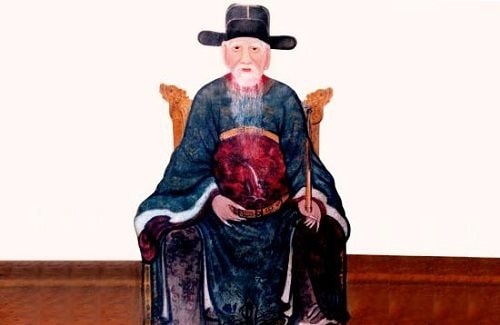
Chu Van An (1292 - 1370) is a prominent emblem of Thang Long’s educational tradition, revered as “Van the su bieu” - the “Teacher of Ten Thousand Generations.” Born in Thanh Tri (Hanoi), he was renowned as a model teacher who valued morality and character above fame and gain. His submission of the That tram so (a petition calling for the execution of seven corrupt officials), and his subsequent resignation to live in seclusion, became a symbol of the lofty integrity of Vietnamese intellectuals. In 2020, UNESCO adopted a resolution to join Vietnam in commemorating Chu Van An (at the 40th session of the UNESCO General Conference of Member States in 2019 in Paris, France), recognizing him as a cultural figure and an exemplary educator.
Beyond Chu Van An, Hanoi is also associated with major scholars such as Le Quy Don - an erudite 18th-century polymath who left an extensive body of work across many fields - and Nguyen Binh Khiem, a great intellectual whose influence extended deeply into Vietnamese thought, education, and cultural life. This stream of scholarship helped shape Thang Long - Hanoi’s identity as a “land of learning.”
Eminent Figures in Literature and the Arts
Hanoi is not only a political and educational center but also a land that nurtures a rich literary and artistic life. Many great cultural figures of the nation were born, grew up, or forged strong ties with Thang Long.
Nguyen Du (1765 - 1820), the nation’s great poet, was born in Thang Long and authored Truyen Kieu, a masterpiece of Vietnamese literature. His work reflects profound insights into the human condition and carries universal humanitarian value. In 1965, UNESCO honored Nguyen Du as a World Cultural Figure, affirming the global significance of Vietnam’s literary heritage.

The great poet Nguyen Du
In modern literature and the arts, Hanoi is both a homeland and a major source of inspiration for many prominent artists such as Nguyen Dinh Thi, To Hoai, Bui Xuan Phai, and Van Cao. Their works not only depict history and social life but also help shape the image of Hanoi in the consciousness of generations - from literature and painting to music.
Eminent Figures in Science and Modern Culture
In the 20th and 21st centuries, Hanoi has continued to serve as the country’s center for science, education, and innovation. Many scientists, doctors, and scholars associated with Hanoi have made important contributions to Vietnam’s development and have gained international recognition.
Professor Tran Dai Nghia was a leading scientist in engineering and national defense, contributing to the foundations of modern Vietnamese science and technology. Professor Ton That Tung pioneered liver surgery; the method bearing his name has been recognized internationally. In the fields of the environment and contemporary science, Professor Vo Quy and Professor Nguyen Thi Kim Thanh are representative figures, demonstrating the continuation of Hanoians’ tradition of learning and creativity in the context of globalization.
Hanoi’s eminent figures are the crystallization of Vietnam’s history, culture, and intellect across many eras. From the virtuous and talented of the medieval period to modern intellectuals, artists, and scientists, they have contributed to the distinctive cultural identity of Thang Long - Hanoi: humanistic, devoted to learning, creative, and deeply responsible to the community.