 Làng nghề
 Di tích văn hóa & lịch sử






♦ Nguyen Quang Ngoc, Prof., PhD (People’s Teacher)
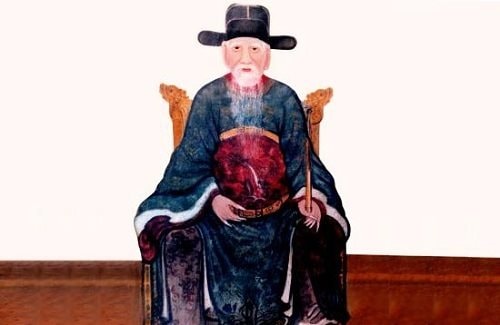
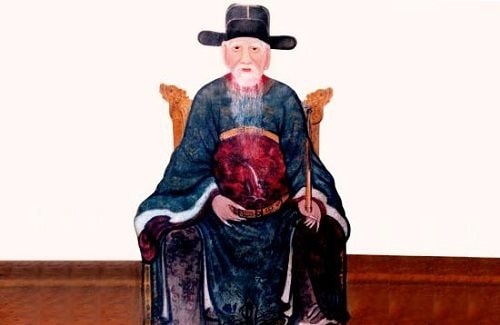
Imperial Consort Y Lan, whose real name was Le Thi Khiet (also recorded as Le Thi Yen), was born in 1044 and died in 1117. She came from Tho Loi village (later renamed Sieu Loai, now in Gia Lam commune, Hanoi). She has often been likened to “Tam of the North”: from a village girl she rose to the rank of Imperial Consort, becoming renowned for her talent in governance. Twice she assumed the role of regent, helping the king maintain stability, promoting Buddhist culture, and being venerated as “Phat ba Quan Am” (the Bodhisattva Avalokitesvara in folk reverence).

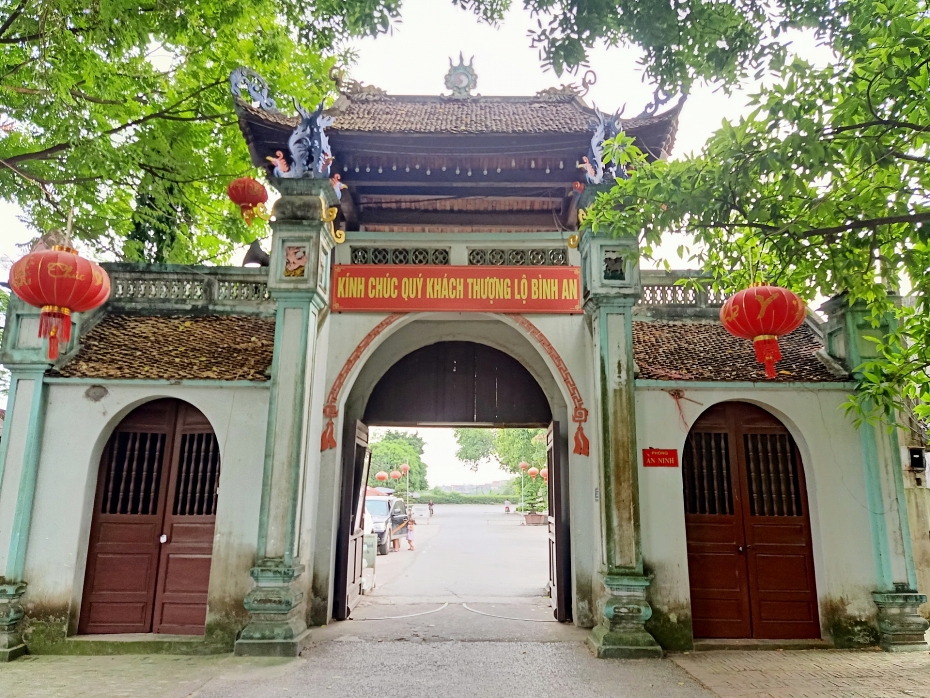
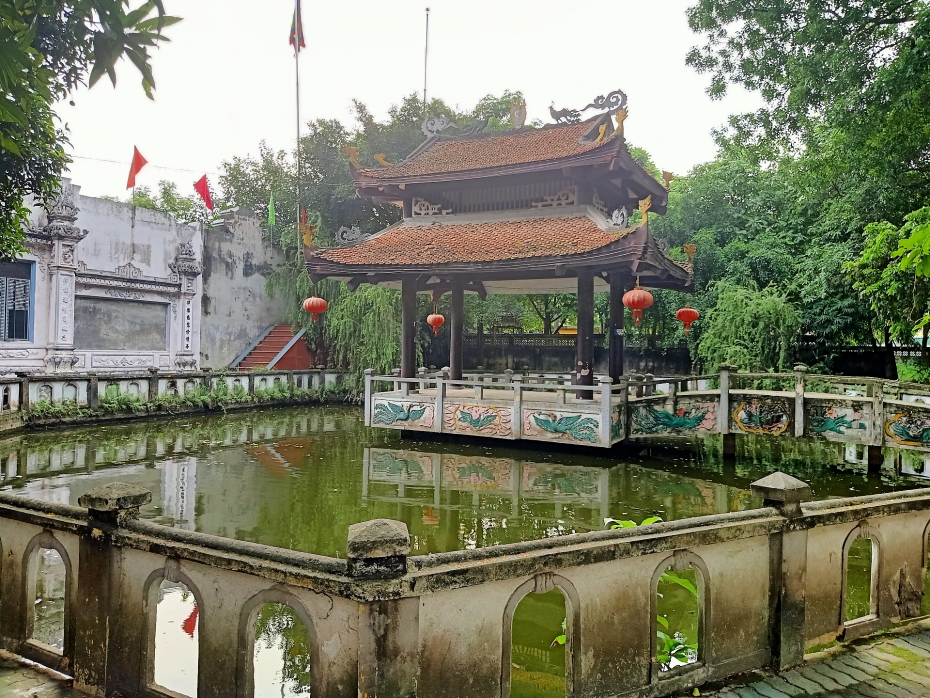
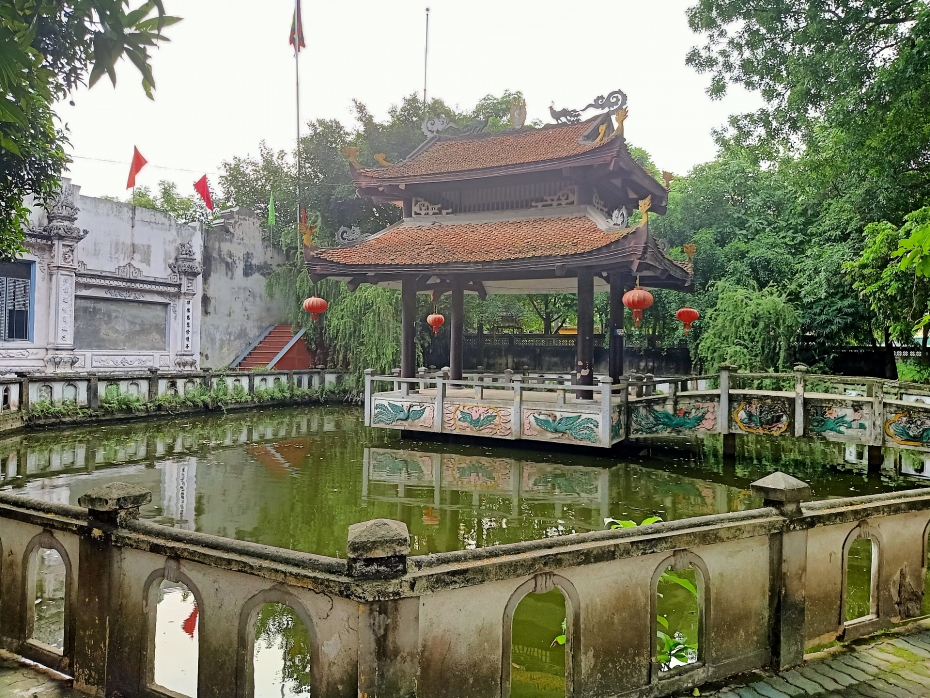
The three-gate entrance (tam quan) seen from the inside features distinctive architecture.
The Meeting Between Empress Dowager Y Lan and Emperor Ly Thanh Tong
Historical sources record at some length the encounter between Y Lan and Emperor Ly Thanh Tong. Dai Viet su ky toan thu - the official national chronicle compiled under the Le dynasty - relates the story as follows: Ly Thanh Tong was born in the Quy Hoi year (1023) at Long Duc Palace outside Truong Quang Gate (Cho Dua Gate). He was the third ruler of the Ly dynasty and is regarded as one of the most outstanding monarchs not only of the Ly house but in the entire history of Vietnam’s monarchy. By the age of forty he still had no son to succeed him. He therefore made many excursions to temples and shrines to pray for an heir. That year was the Quy Mao year (1063). The emperor traveled to the Sieu Loai area (Tho Loi, Duong Xa, Gia Lam, Hanoi). Crowds of boys and girls came continuously to watch, but there was one young woman picking mulberry leaves who stood quietly, sheltered in a clump of orchids and grass. The emperor noticed her, summoned her to the palace, grew fond of her, and conferred on her the title Y Lan phu nhan. Yet several years passed and there was still no child. The emperor then ordered Nguyen Bong, a court attendant (Chi hau Noi nhan), to conduct rituals of supplication at Thanh Chua Pagoda (within the grounds of today’s National University of Education). The pagoda’s abbot taught Nguyen Bong a technique related to reincarnation and transformation. Nguyen Bong followed these instructions, and afterwards Y Lan phu nhan became pregnant and gave birth to Prince Can Duc (later Emperor Ly Nhan Tong). When the matter was exposed, Nguyen Bong was executed in front of the gate of Thanh Chua Pagoda[1].

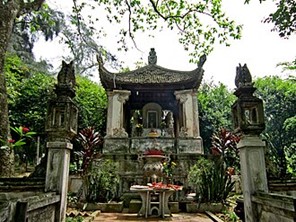
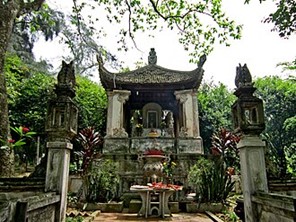
Pair of Ly-dynasty dragons prostrating along the hillside at the worship site of Imperial Consort Y Lan
Two Times Imperial Consort Y Lan Held the Reins of Government
The first time: In the Ky Dau year (1069), Ly Thanh Tong launched a campaign against Champa and entrusted all affairs of state to Imperial Consort Y Lan. In the first battles, Ly forces suffered defeats, and Ly Thanh Tong was compelled to withdraw as far as Cu Lien. There he received news that in the Thang Long capital, the Imperial Consort “managed internal affairs; the people’s hearts were moved and reconciled; the realm remained secure; Buddhism was venerated; and the people called her Lady Quan Am.” Ly Thanh Tong was delighted and remarked, in essence, that “if even a woman can accomplish this, how can I, a man, achieve nothing worthy?” He decided to turn the army back for a decisive engagement. This time the Ly forces won a great victory, capturing the Champa king Che Cu and fifty thousand people and bringing them back to Thang Long. Later, Che Cu offered three districts - Dia Ly, Ma Linh, and Bo Chinh (in what is now Quang Tri Province) - as tribute[2].
The second time: In the Nham Ty year (1072), King Ly Thanh Tong passed away. Prince Ly Can Duc, only six years old, ascended the throne, and the Empress Dowager Linh Nhan “ruled from behind the curtain” as regent. Ly Nhan Tong reigned the longest of any monarch in Vietnam’s monarchical history - 56 years (from 1072 to 1127). He was praised as a ruler of wisdom and martial competence, humane intelligence; “great states feared him, small states admired him; ministers supported him and the people followed”; he also understood music and set regulations for song and performance, so that the people prospered and the realm enjoyed peace - thus he was considered an exemplary king of the Ly dynasty.[3] The successes of Ly Nhan Tong, of the dynasty, and of the country during more than fifty years from the late 11th to the early 12th century owed an exceptionally important debt to Imperial Consort Y Lan. Alongside her stood figures such as Ly Dao Thanh, Ly Thuong Kiet, Le Van Thinh, and others.…
-------------------------------------------