 Làng nghề
 Di tích văn hóa & lịch sử




♦ Prof. Dr. Nguyen Quang Ngoc
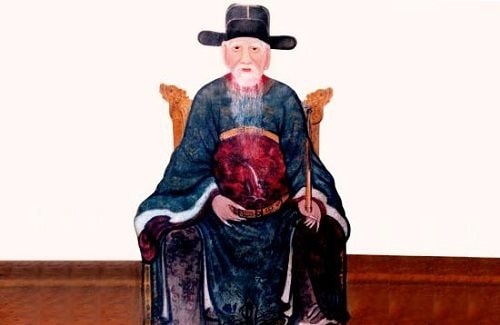
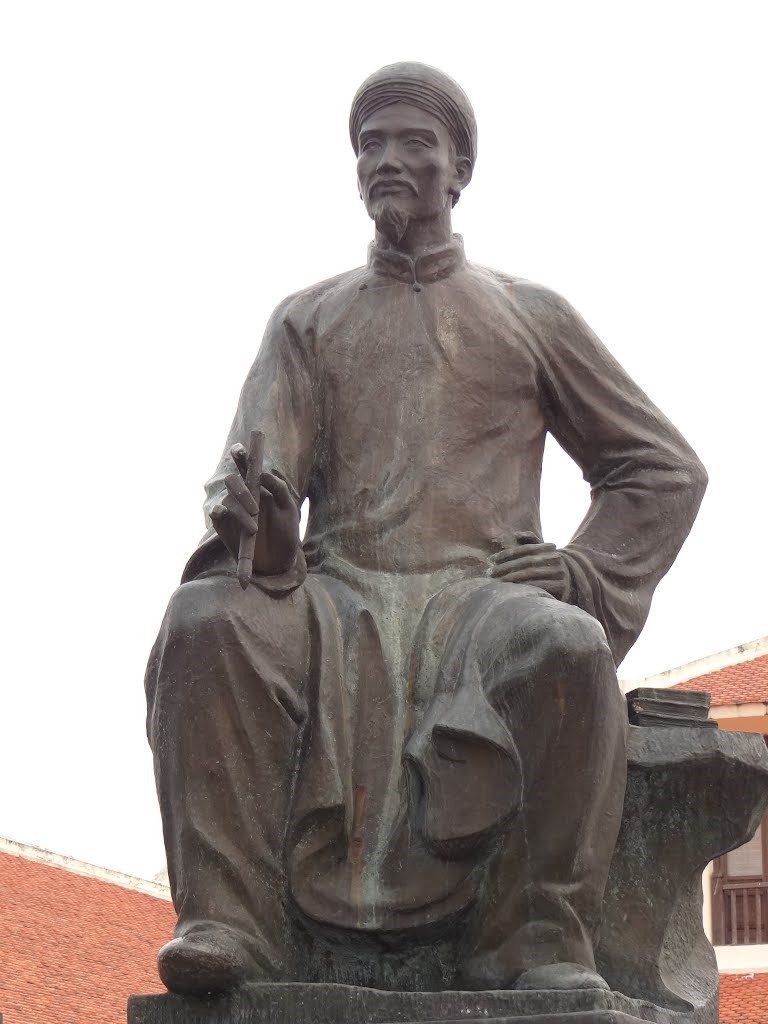
thuongNgo Quyen was born on April 6, 898 (the 12th day of the 3rd lunar month, Year of Mậu Ngọ) in Duong Lam village (present-day Sơn Tây Ward, Hanoi). He was born into a family that had been “aristocratic for generations” in a countryside rich with patriotic traditions of resisting Northern invaders. Growing up during the forceful rise of the Khúc family in their effort to build an autonomous administration, and immersed in the new national atmosphere, Ngo Quyen followed his ancestors’ ambitions by rallying forces and gradually becoming a powerful figure in his homeland of Duong Lam [1].
thuongIn 923 (Year of Quý Mùi), Khuc Thua My was defeated, and the Southern Han re-established their yoke of rule in Dai La Citadel. Meanwhile, Duong Dinh Nghe built Ai Chau (Thanh Hóa) into a base for resistance. Ngo Quyen joined Duong Dinh Nghe’s ranks and became a trusted general of the Duong family.
thuongIn 931 (Year of Tân Mão), Duong Dinh Nghe appointed Ngo Quyen as the vanguard general to march upon Giao Chau, expel the Southern Han army, and restore autonomy. After clearing the invaders, Duong Dinh Nghe took power, maintaining the title of Tiet do su (Jiedushi) to preserve diplomatic harmony with Northern feudalism. He established his capital at Dai La and assigned trusted generals to key regions. Ngo Quyen was entrusted with the governance of his homeland, Ai Chau. His years of service to the autonomous administration provided him with the opportunity to display his talents, becoming an eminent general admired by the people and respected by his troops.
thuongIn 937 (Year of Đinh Dậu), at Dai La Citadel, Duong Dinh Nghe was assassinated by his subordinate, Kieu Cong Tien, who usurped the title of Tiet do su. By late October 938 (Year of Mậu Tuất), recognizing the imminent threat of invasion from the Southern Han, Ngo Quyen led his army from Ai Chau to the North to strike Kieu Cong Tien. Tien sent messengers to plead for aid from the Southern Han. The recently restored national independence was gravely threatened from both within and without. The country entered a grueling new challenge. Meeting the demands of history, Ngo Quyen—the true representative of the nation—became the focal point for unifying all resistance forces. He led the great army to the Bach Dang estuary to confront the Southern Han. The battle unfolded and concluded within a single tide—in just one day. The invading armada was completely annihilated upon entering the threshold of the Motherland's waters.
thuongGeneral Vo Nguyen Giap, under the pen name Hong Nam, remarked: “The Bach Dang victory in late 938 is recorded in history as a glorious martial feat, immortal for all time. It marked a great historical turning point, a milestone that ended over a thousand years of domination by Chinese feudal dynasties, opening a new era of long-term independence and brilliant national development.” [2]
thuongThe Bach Dang Victory on December 31, 938 (the 7th day of the 12th lunar month, Year of Mậu Tuất) [3] was a lightning strike of peak efficiency in the nation’s history of anti - invasion warfare. This glorious feat permanently ended the threat of enslavement and assimilation by Northern enemies. Following the victory, Ngo Quyen led his army to establish the state, proclaimed himself King, and chose Loa Thanh (Cổ Loa, Đông Anh, Hanoi) as the capital. He severed all ties of dependency on foreign powers and built a centralized monarchical administration—a truly independent kingdom.
thuongLe Van Huu, the 13th-century historian who enlightened Dai Viet historiography during the Tran era, affirmed: “The First Ngo King could take the newly gathered troops of our Viet land to crush the million-strong army of Luu Hoang Thao, opening the country and claiming kingship, making the Northerners fear to return. It can be said that one act of wrath brought peace to the people; he was as brilliant in strategy as he was in battle. Though he only claimed Kingship and did not yet ascend the Imperial throne or change the era name, the orthodox lineage of our Viet land was nearly re-connected.” [4]
thuongIn the 15th century, Ngo Si Lien asserted: “The First Ngo [King] rose not only with the merit of victory; by appointing officials and establishing court rituals and attire, one can see the scale of an Emperor.” [5] In the Complete Annals of Dai Viet, Ngo Si Lien ranked Ngo Quyen as the foremost among all Đai Viet monarchs: “The King was talented in strategy and battle, achieving the merit of national rebirth, ranking first among the Kings.” [6]
thuongNgo Thi Si in the 18th century summarized Ngo Quyen's life and career with precision: “The King destroyed domestic traitors to avenge his lord, expelled foreign invaders to save the nation from calamity, built the country, and restored the national tradition; his achievements were truly monumental.” [7]
thuongOn February 14, 944 (the 18th day of the 1st lunar month, Year of Giáp Thìn) [8], Ngô Quyền passed away. His reign lasted less than six years and much remained unfinished; however, the Ngo Dynasty is recognized as “an independent state of a nation with full sovereignty, judged by ideological consciousness as well as practical activity.” [9]
thuongThe eminent patriot of the early 20th century, Phan Boi Chau, was entirely correct in honoring Ngo Quyen as the “Forefather of our Nation’s Restoration,” second only to the “Founding Ancestors, the Hung Kings.” According to him, “if external enemies were expelled and the severed lineage of the country was reconnected, no one surpasses Ngo Vuong Quyen.” [10]
thuongIn 1941, upon returning to Cao Bang to write The History of Our Country, President Ho Chi Minh praised the hero of Duong Lam for “saving the people from a thousand years of misery.” General Vo Nguyen Giap, from the historical vantage point of the Ho Chi Minh era, repeatedly affirmed that the 938 Bach Dang victory and the establishment of the state by Ngo Quyen marked a great historical turning point for the Vietnamese people.

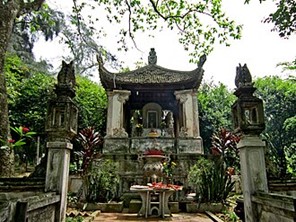
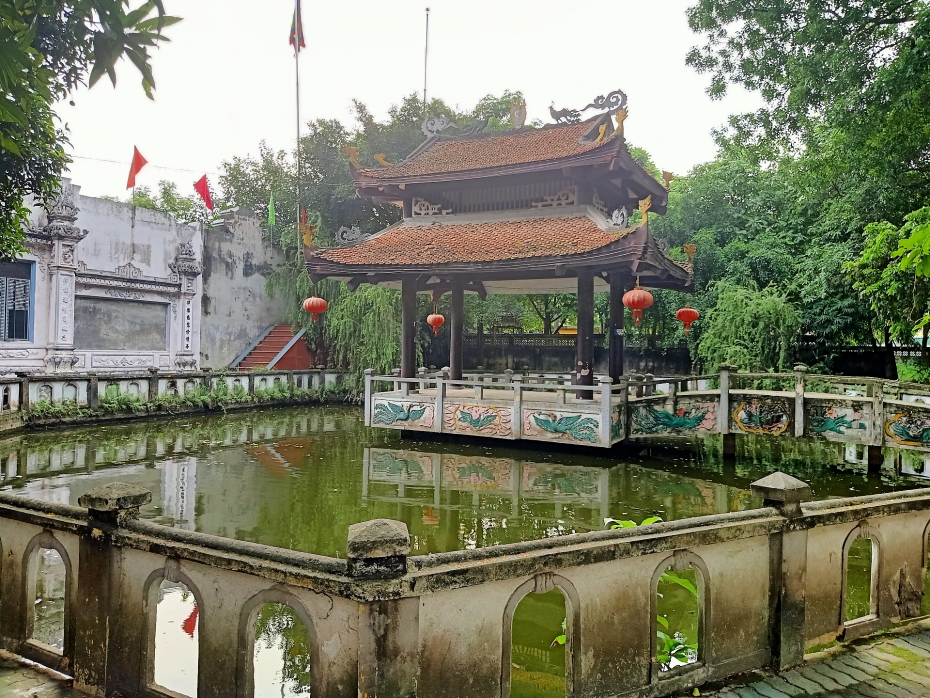
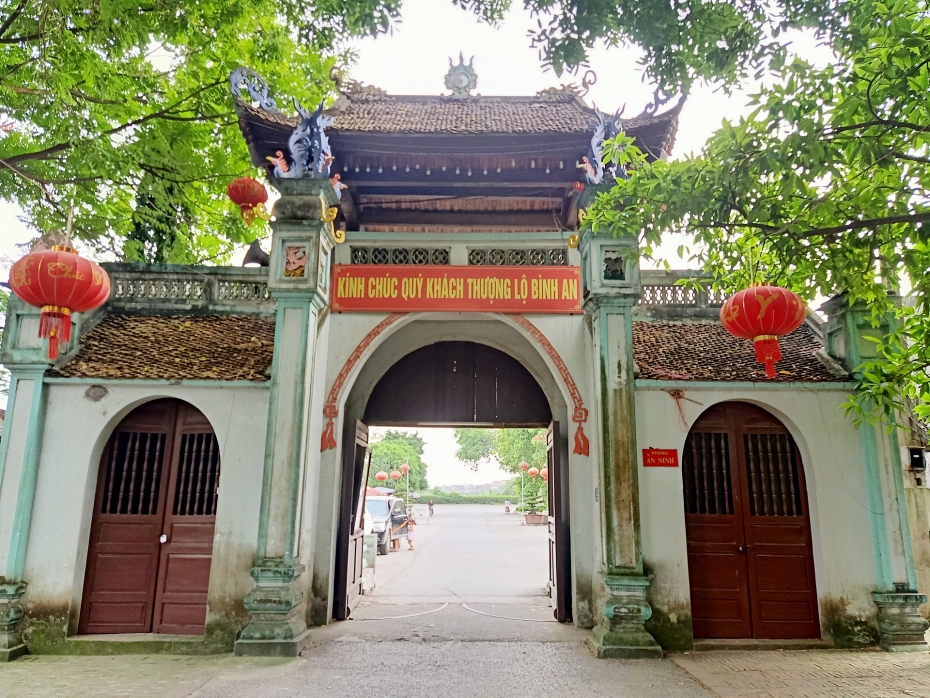
The Tomb of Ngo Quyen in Duong Lam (Son Tay, Hanoi)
thuongThe event of Ngo Quyen founding the state, claiming kingship, and establishing the capital at Co Loa was the culmination of a millennium of anti-Northern domination struggles. It was the continuation and elevation of the final victory at Bach Dang, marking a fundamental leap in Vietnamese history. Ngo Quyen is forever honored as a Great National Liberation Hero, the Vi To Trung Hung (Restorer Ancestor) of our Vietnam. From Le Van Huu to modern historians both domestically and internationally, this remains the unified consensus.
------------------------------------------------------
[1] Some authors suggested Duong Lam might be in Ha Tinh or Thanh Hoa. However, current research provides sufficient scientific basis to confirm Duong Lam (Son Tay, Hanoi) as Ngo Quyen's birthplace and homeland.
[2] Hong Nam, Hong Linh (Eds.) (1984), Glorious Pages of Vietnamese History against Chinese Feudal Invasions, Social Sciences Publishing House, Hanoi, p. 204. [3] Ancient records agree on the December 938 date. Specifically, the Ngoc Pha (Jade Genealogy) of Hoang Pha (Thuy Nguyen, Hai Phong) specifies the 7th day of the 12th lunar month (Dec 31, 938).
[4] Dai Viet Su Ky Toan Thu (1993), Vol 1, pp. 204-205.
[5] Dai Viet Su Ky Toan Thu (1993), Vol 1, p. 205.
[6] Dai Viet Su Ky Toan Thu (1993), Vol 1, p. 204. Original text: “Vuong thien muu thien chien, tai tao chi cong di thanh, vi chu vuong chi quan”.
[7] Dai Viet Su Ky Toan Thu (1997), Social Sciences Publishing House, Hanoi, p. 141.
[8] Complete Annals only notes he died in 944. The Gia Viên Temple Records specify the 18th day of the 1st lunar month (Feb 14, 944).
[9] Phan Huy Le (2011), Returning to the Roots, The Gioi Publishing House, p. 700. [10] Phan Boi Chau (1962), Investigation of Vietnamese National History, Education Publishing House, Hanoi, pp. 21-25.