 Làng nghề
 Di tích văn hóa & lịch sử






♦ M.A. Nguyen Van Hoan
thuongFor centuries, Hanoi, formerly known as Thang Long, has been regarded as a sacred land with extraordinary people, where generations of outstanding talents have emerged and flourished throughout Vietnamese history. As the nation’s capital for many centuries, Thang Long - Hanoi has served not only as a political center but also as a space that attracted and nurtured intellect, virtue, and talent from all regions of the country. This distinctive historical and cultural environment has contributed to the formation of successive generations of eminent personalities who have left profound imprints on the history, culture, and spiritual life of the capital.
thuongWithin this historical continuum, numerous historical and cultural figures have become closely associated with iconic symbols of Hanoi. The legend of King Le Loi and Hoan Kiem Lake (Lake of the Returned Sword, also known as Sword Lake) or the image of Tháp Bút (The Pen Tower) and Đài Nghiên (The Ink Slab) by Hoan Kiem Lake associated with Nguyen Van Sieu, stand as emblematic examples of the enduring relationship between eminent figures and the cultural spaces of the capital. Besides, many other intellectuals, cultural scholars, artists, and scientists have contributed to shaping Hanoi’s identity across different periods, leaving lasting impressions in the city’s collective memory and the spiritual life of its people.
thuongBuilding upon this long-standing tradition, Hanoi is also closely linked to eminent figures whose influence transcends national boundaries. Among the distinguished personalities of Thang Long - Hanoi, three outstanding figures, including Nguyen Trai, Chu Van An, and Ho Chi Minh, have been honored by the United Nations Educational, Scientific, and Cultural Organization (UNESCO). UNESCO’s recognition not only affirms the immense value of these individuals’ contributions but also underscores Hanoi’s special role in shaping and disseminating cultural and ideological values of human significance.
Nguyen Trai (1380-1442) - World cultural personality
thuongNguyen Trai was born in 1380 in Thang Long, into a family renowned for its scholarly tradition and patriotic spirit. He lived during a turbulent historical period, when the country was under the domination of the Ming dynasty, and he developed a will to fight for national independence early on.
thuongIn his political career, Nguyen Trai was a founding national hero of the Early Le dynasty, playing a pivotal role in the Lam Sơn uprising led by Le Loi. As a chief strategist and military advisor, he contributed not only to military victories but also to the construction of the ideological foundations of the newly independent nation. His seminal work Bình Ngô đại cáo (Great proclamation upon the pacification of the Wu) (1428) is widely regarded as a declaration of national sovereignty and the people’s right to live in peace. The text articulates the principle of “taking the people as the root” and reflects a profound aspiration for lasting peace.

thuongBeyond politics, Nguyen Trai was also a cultural figure. He left behind numerous influential works in literature, history, and geography, including Quốc âm thi tập (National pronunciation poetry collection), Ức Trai thi tập (Ức Trai collection of poems), and Dư địa chí (Treatise of geography). Notably, Quốc âm thi tập represents a major milestone in the development of chữ Nôm (the former Vietnamese script based on Chinese characters), affirming the position of the Vietnamese language in the nation’s cultural life.
thuongIn 1980, on the occasion of the 600th anniversary of his birth, UNESCO passed a resolution honoring Nguyen Trai as a World Cultural Personality, recognizing his outstanding contributions in the fields of politics, literature, and humanist thought. This international recognition not only affirms the universal value of Nguyen Trai’s ideas but also elevates the global standing of Vietnamese culture.
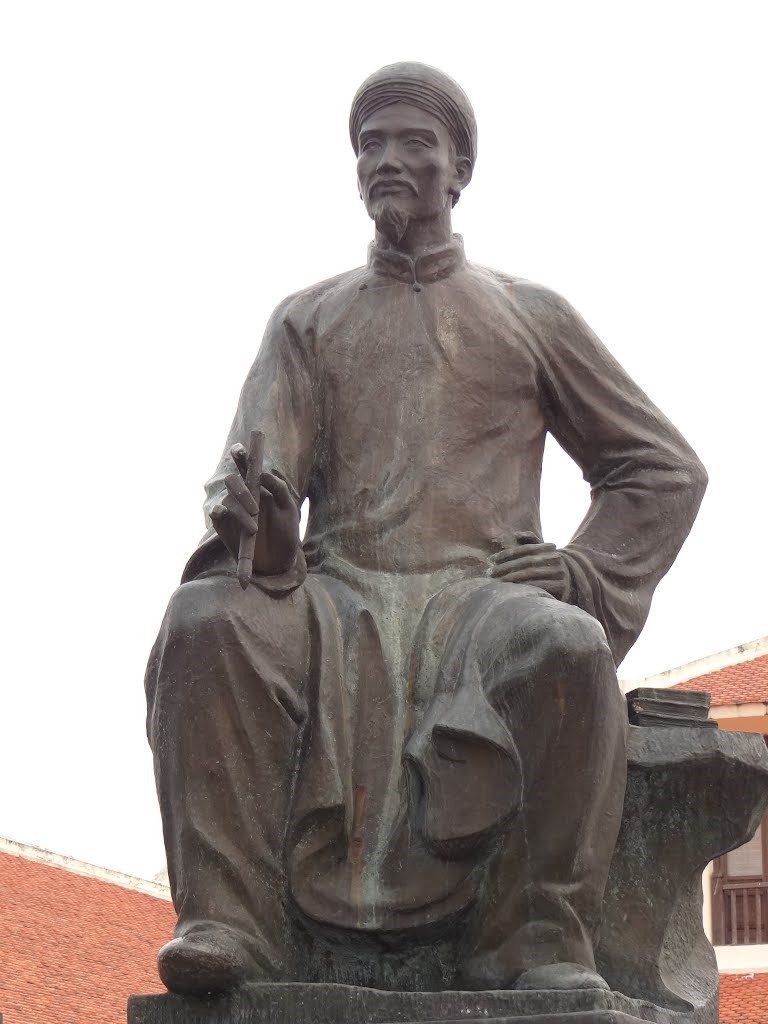
Chu Van An (1292-1370) – An exemplary educator and cultural personality
thuongChu Van An was born in 1292 in what is now Thanh Tri District, Hanoi. He is best known as a great educator who laid the foundation for a Vietnamese educational tradition that emphasizes morality and character formation.
thuongDuring the Tran dynasty, Chu Van An was appointed Tư nghiệp Quốc Tử Giám, the head of the country’s highest educational institution. However, his enduring significance lies not in his official position but in the moral integrity and principled conduct of a true intellectual. At a time of political decline, he submitted the famous Thất trảm sớ (Memorial requesting the execution of seven corrupt officials), urging the king to punish corrupt courtiers in order to uphold ethical order and justice. When his petition was rejected, he resigned from his post, retired into seclusion, and devoted himself to teaching, maintaining his integrity and righteousness.
thuongIn his educational philosophy, Chu Van An emphasized “teaching people how to be human” over merely “teaching literacy”, thereby laying the groundwork for a holistic approach to education that places moral cultivation at its core. He has since become a powerful symbol of the Vietnamese tradition of respecting teachers and morality and upholding ethical integrity among intellectuals.
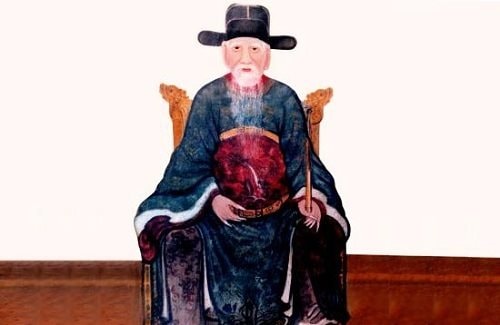
 Chu Van An – “The Teacher of All Generations” (Source: Vietnam National History Museum).
thuongIn 2019, UNESCO, in cooperation with the government of Vietnam, commemorated the 650th anniversary of Chu Van An’s death, honoring him as an exemplary educator and cultural figure. This recognition highlights the timeless and borderless resonance of Vietnam’s ethical and educational values.
Ho Chi Minh (1890-1969) - National liberation hero and eminent cultural personality
thuongHo Chi Minh was born in 1890 in Nghe An province; however, Hanoi is deeply intertwined with his revolutionary career. It was at Ba Đinh Square in Hanoi on September 2, 1945, that he proclaimed the Declaration of Independence, giving birth to the Democratic Republic of Vietnam and ushering in a new era in the nation’s history.
thuongThroughout his revolutionary life, Ho Chi Minh was not only an outstanding political leader but also a great cultural figure. He assimilated the quintessence of world cultures and combined it with Vietnam’s national traditions to form an ideology of national liberation closely linked to peace, independence, freedom, and human happiness. These values are clearly reflected in his political writings, speeches, and essays, as well as in his modest, humane lifestyle.

President Ho Chi Minh – Hero of Vietnam’s national liberation, an outstanding cultural figure (Archival photo)
thuongIn 1987, UNESCO adopted a resolution commemorating the 100th anniversary of President Ho Chi Minh’s birth, honoring him as a national liberation hero and an eminent cultural personality of Vietnam. The resolution emphasized that his ideas and career made significant contributions to the common struggle of peoples worldwide for peace, national independence, democracy, and social progress. UNESCO’s recognition of Ho Chi Minh thus represents not only an acknowledgment of his individual legacy but also an affirmation of the position of Vietnamese humanist thought in the global context./.
The significance of UNESCO’s recognition of personalities associated with Hanoi
thuongUNESCO’s recognition of Nguyen Trai, Chu Van An, and Ho Chí Minh demonstrates that the ideological, ethical, and cultural values shaped by Vietnamese personalities possess universal significance and align with humanity’s shared ideals. At the same time, it underscores the special role of Thang Long - Hanoi in shaping, nurturing, and disseminating these values.
thuongSpanning three historical eras, these three figures share a common core: a humanist spirit, a commitment to peace, respect for human dignity, and a strong sense of social responsibility. These values also form the foundation upon which Hanoi was awarded the title “City for Peace” by UNESCO in 1999.
thuongNguyen Trai, Chu Van An, and Ho Chi Minh are exemplary personalities associated with Hanoi and have been honored by UNESCO for their outstanding contributions to culture, ideology, and humanism. UNESCO’s recognition not only pays tribute to these individuals but also affirms the enduring value of Vietnamese culture within the broader flow of human civilization.
---------------------------------------------------