 Làng nghề
 Di tích văn hóa & lịch sử






♦ Dr. Le Thi Thu Huong
thuongIn 179 BC, Zhao Tuo (Triệu Đà) captured the Cổ Loa Citadel from An Dương Vương of the state of Âu Lạc. This event marked the beginning of more than a thousand years of painful Chinese domination in Vietnamese history. Successive Chinese feudal dynasties, from the Zhao, Han, Six Dynasties, to the Sui and Tang, ruled over our country. From that point, Âu Lạc became the southern frontier territory of China. Its administrative divisions were repeatedly reorganized, and the ancient Hanoi region likewise underwent continual administrative changes. In 106 BC, the Han Dynasty established Jiaozhi Province (Giao Chỉ), governing seven mainland commanderies, among which Jiaozhi Commandery (quận Giao Chỉ) occupied a central and especially strategic position. The territory of Jiaozhi Commandery essentially covered the entire Northern region, including the Red River Delta plains and the northeastern upland forests. According to the Tiền Hán thư (Geography treatise of the book of Han), Jiaozhi Commandery comprised ten districts (huyện): Liên Lâu (Luy Lâu), An Định, Câu Lậu, Mê Linh, Khúc Dương, Bắc Đái, Kê Từ, Tây Vu, Long Biên, and Chu Diên. The land of Hanoi during the Han domination era fell within the territory of four districts: Mê Linh, Tây Vu, Chu Diên, and Liên Lâu (Luy Lâu). These were among the most central and important districts of Jiaozhi Commandery. Compared to Hanoi’s current administrative map, the entire expanded territory of Hanoi since August 1, 2008, lies within the area of Jiaozhi Commandery under the Western Han period.

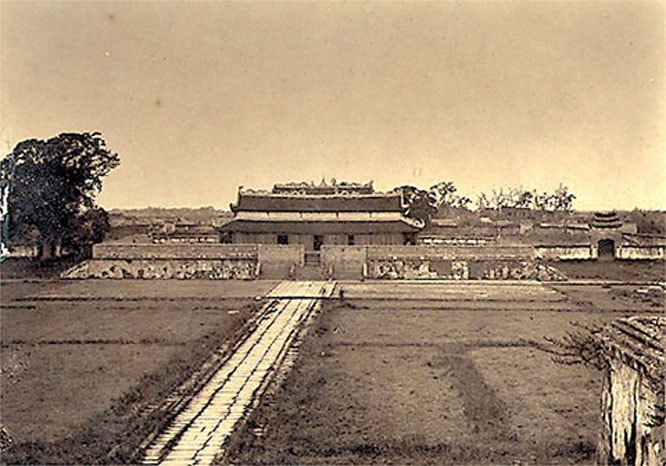
Cổ Loa Citadel
thuongBy the 5th century CE, the territory of present-day Hanoi had hosted administrative centers of the northern ruling authorities, such as Mê Linh, or areas near such seats, including Long Biên and Luy Lâu (now in Bắc Ninh province). Whether an administrative seat was located here or not, this remained a place with great economic potential, a dense population, and an early patriotic and insurgent spirit that greatly concerned the colonial powers. The beginning of the resistance period against northern domination in the Hanoi area was the uprising led by the King of Tây Vu (Tây Vu Vương) in 111 BC. This uprising also marked the start of the entire heroic history of resistance against northern domination for our nation [1].
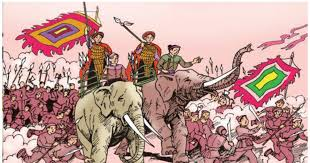
thuongIn 40 CE, the uprising of the Trưng Sisters broke out against the rule of the Eastern Han dynasty. According to legends, on the land that is now Hanoi, many people followed the Trưng Sisters to join their forces and became distinguished commanders, specifically: “In the wards of Đống Đa, Láng, Ô Chợ Dừa, Kim Liên, and Văn Miếu - Quốc Tử Giám, there were three brothers surnamed Đào; in the communes of Đông Anh, Thư Lâm, Phúc Thịnh, Thiên Lộc, and Vĩnh Thanh, there were Đào Kỳ, Phương Dung, Đông Bằng, Thủy Hải, Đăng Giang, Khổng Chúng, and Vĩnh Huy. In the communes of Phù Đổng, Thuận An, Gia Lâm, and Bát Tràng, there were Thành Công, Ông Đô, Ông Hiển, Ông Lang, Khỏa Ba Sơn, Nàng Quốc, Ông Đống, and Ông Hựu. In Thanh Trì district, there were Nàng Tía (Trương Tử Nương) and Triệu Tam Trinh. In the wards of Tây Tựu, Phú Diễn, Xuân Đỉnh, Đông Ngạc, Thượng Cát, Từ Liêm, Tây Mỗ, Đại Mỗ, and Xuân Phương, there were Quách Lãng, Tĩnh Lương, Bạch Lương, Vĩnh Gia, Ả Lã, and Nàng Đê.” [2]. The Trưng Sisters’ uprising symbolized the national will for independence and the spirit of resistance against foreign invasion, leaving a profound imprint on the collective memory of Hanoi’s people, evidenced by the Temple of the Trưng Sisters in Hai Bà Trưng ward and numerous temples dedicated to the uprising’s generals throughout inner and suburban Hanoi.
thuongIn the 5th century, the district of Tống Bình, belonging to Jiaozhi Commandery, was established. Its administrative seat was on the northern bank of the Tô Lịch River, corresponding to present-day Hanoi. Later, Tống Bình district became Tống Bình Commandery (comprising three districts: Xương Quốc district on the northern bank of the Red River, extending to today’s Cổ Loa - Đông Anh; Nghĩa Hoài and Tuy Ninh districts on the southern bank of the Red River, corresponding to today’s inner Hanoi). From this point, the administrative seats of the ruling authorities gradually shifted into the area of present-day inner Hanoi.
thuongIn the spring of 542, Lý Bí raised the banner of revolt. This event marked a major milestone in the millennium-long struggle against northern domination. Not only did the uprising defeat repeated counterattacks by Liang forces from the north and repel incursions by Champa from the south, but it also led to the establishment of an independent imperial court. According to the Complete annals of Đại Việt (Đại Việt sử ký toàn thư), “In the spring, the first month, having defeated the enemy, the king proclaimed himself Emperor of Nam Việt, ascended the throne, established a reign title, appointed officials, and named the state Vạn Xuân, expressing the wish that the realm endure for ten thousand generations. He built the Vạn Thọ Palace as the court venue, appointed Triệu Túc as Grand Preceptor, with Tinh Thiều and Phạm Tu serving as civil and military officials [3]. From the very beginning, participants in the uprising included notable figures from the Hanoi region, such as Phạm Tu (now worshipped at a temple in Thanh Liệt) and Lý Phục Man (native of Dương Hòa, present-day Hanoi). Lý Bí, later known as Emperor Lý Nam Đế set the national name as Vạn Xuân (Then thousand springs), wishing “the state to last for ten thousand generations.” This name endured in later Hanoi toponyms, including Vạn Xuân Citadel of the Lý dynasty and Vạn Xuân (or Vạn Xoan) Lagoon in Thanh Trì. Lý Bí was the first in Vietnamese history to recognize the central, pivotal position of the confluence of the Nhị Hà (Red River) and Tô Lịch River. He chose the area where the Tô Lịch River meets the Nhị Hà (the ancient Thăng Long - Hanoi area) as the site for his capital. Buddhism from India had been introduced to our country early on, with its center at Dâu Pagoda (Luy Lâu, Thuận Thành, Bắc Ninh). Inspired both by Buddhist ideals and the aspiration to inaugurate a new era of independence, Lý Bí ordered the construction of Khai Quốc (Founding the nation) Pagoda, originally built outside the dyke system and later relocated inward. Its present-day remnant is Trấn Quốc Pagoda in Hanoi.
thuongAt the beginning of the 7th century, the Vạn Xuân state collapsed. Although the Red River-Tô River confluence was no longer the capital of an independent state, its central position remained undiminished. The Northern occupying dynasties, the Sui and the Tang, both established their colonial headquarters there, rather than at Luy Lâu or Long Biên as earlier regimes had done. In 607, the Sui dynasty transferred the seat of Jiaozhi Commandery to Tống Bình (within present-day inner Hanoi). From this moment, the central area of modern Hanoi officially became the administrative capital of northern rule. This development also marked the beginning of urban formation in Hanoi, characterized by fortified citadels and an emerging urban population. During Tang rule, which lasted nearly three centuries, continuous efforts were made to build, reinforce, and repair city walls. The largest construction phase was in 866 when the military commissioner (Tiết độ sứ) Gao Pian (Cao Biền) oversaw the building of the Đại La Citadel, the largest fortification ever constructed in Hanoi’s central area. One principal purpose of reinforcing Đại La was to suppress popular uprisings, particularly those originating in the ancient Hanoi region. Resistance against Tang domination consistently drew active participation from the people of ancient Hanoi. In Đường Lâm, the local magnate Phùng Hạp Khanh (father of Phùng Hưng) responded to the uprising of Mai Thúc Loan (713-722), mobilizing forces and preparing to attack Tống Bình Citadel. According to legend, Phùng Hạp Khanh’s army included large numbers of local residents and members of his own family.
thuongIn the latter half of the 8th century, as Tang central authority weakened and colonial officials intensified exploitation through heavy taxation, popular resentment surged. Taking advantage of a mutiny by soldiers stationed at Tống Bình, Phùng Hưng launched a major uprising against Tang rule. In 766, together with his brother Phùng Hải, he seized control of Đường Lâm and advanced toward Tống Bình, gaining widespread support from surrounding regions. He organized the siege of Tống Bình Citadel. The Tang governor Cao Chính Bình, besieged for a long time, grew overly anxious, fell ill, and died. Phùng Hưng occupied the administrative headquarters and governed for seven years before his death. His son, Phùng An, succeeded him and maintained control for two more years before the Tang Dynasty sent Triệu Xương to serve as the Protector - General of Annam (Đô hộ An Nam). Triệu Xương used tactics, bringing gifts to lure Phùng An into surrendering. In 791, Phùng An surrendered to the Tang, and the uprising failed.
thuongFollowing Phùng Hưng’s uprising, in 819, when Dương Thanh and his son Dương Chí Liệt rebelled and captured Tống Bình Citadel, the people of the ancient Hanoi area once again actively responded.
(To be continued...)
---------------------------------------------
[1] Phan. H. L (Ed.) (2012), History of Thăng Long - Hanoi (Lịch sử Thăng Long - Hà Nội), Vol. 1, op. cit., p.168. Note: The King of Tây Vu (Tây Vu Vương) was the chief of Tây Vu district, a descendant of King An Dương Vương. After Âu Lạc fell into the hands of the Zhao Dynasty, the King of Tây Vu used Cổ Loa Citadel as a base to lead the people in an uprising aimed at regaining independence, but was defeated.
[2] Lê. X. T, Hanoi Encyclopedia (Bách khoa thư Hà Nội), Vol. 1, op. cit., p.74.
[3] Đại Việt sử ký toàn thư (Complete Annals of Đại Việt), Vol. 1 (2010), op. cit., p.179.