 Làng nghề
 Di tích văn hóa & lịch sử






♦ Dr. Le Thi Thu Huong
(Hanoi Metropolitan University)
(Continued and conclusion)
Hanoi in the first period of independence (Khúc - Dương - Ngô - Đinh - Early Lê Dynasties)
thuongBy the end of the 9th century, the Tang Dynasty had fallen into decline, and the internal situation in the North was fragmented into the situation of “Five Dynasties and Ten Kingdoms” (Ngũ đại thập quốc, 907 - 960). This constituted a favorable objective condition that enabled the Vietnamese people to rise up and struggle to reclaim national independence.
thuongIn 905, Khúc Thừa Dụ, a prominent regional magnate from Hồng Châu (Hải Phòng), renowned for both talent and moral integrity, gained widespread popular support and rose in rebellion. He led his forces into Đại La Citadel, overthrew the Tang Dynasty’s occupying government, and proclaimed himself military commissioner (Tiết độ sứ). In reality, Khúc Thừa Dụ had established an autonomous government. The Tang Dynasty was forced to recognize him as the military commissioner of Tĩnh Hải quân (Jinghai Circuit). In early 906, the Tang emperor had to further bestow upon Khúc Thừa Dụ the title of Đồng bình chương sự (Co - minister of state affairs) to oversee the land of Annam. From the Đại La area, Khúc Thừa Dụ’s son, Khúc Hạo, upon succeeding his father, implemented many reforms aimed at improving people’s livelihoods and consolidating national autonomy. After Khúc Hạo, Khúc Thừa Mỹ came to power. By 930, however, Đại La Citadel fell back into the hands of the Southern Han forces. From 905 to 930, though incomplete, the Khúc family laid a solid foundation for the subsequent struggle toward complete national sovereignty.
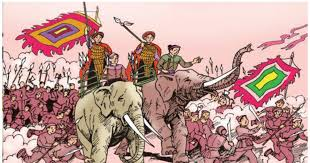
thuongFollowing the Khúc family came the period of the Dương clan. Dương Đình Nghệ, a native of Thanh Hóa, was originally an official from the Khúc period. When Khúc Thừa Mỹ was captured by the Southern Han army, he exerted great effort to mobilize troops and prepare to fight the Southern Han. In 931, Dương Đình Nghệ led forces from Ái Châu to capture Đại La Citadel and proclaimed himself military commissioner. In 937, he was assassinated by Kiều Công Tiễn, who then usurped the position and appealed to the Southern Han for military support. This act provoked widespread outrage among the population, particularly the people of Đại La. In 938, Ngô Quyền (from Đường Lâm village) led forces from Ái Châu to attack Đại La Citadel, eliminating Kiều Công Tiễn. He then organized the planting of wooden stakes on the Bạch Đằng River to block and attack the invading Southern Han forces. The victory over the Southern Han on the Bạch Đằng River in 938 was a resounding triumph and a decisive turning point in Vietnamese history. This event permanently ended more than a millennium of northern domination and ushered in a long era of national independence.

thuongIn 939, Ngô Quyền proclaimed himself king and decided to establish his capital at Cổ Loa, the former capital of the Âu Lạc state. Cổ Loa became the capital for the second time after the era of King An Dương Vương. After Ngô Quyền’s death in 944, local powers rose up and entrenched themselves in rival territories, plunging the country into the period known as the Anarchy of the 12 warlords (loạn 12 sứ quân). After suppressing these warlords and reunifying the country, Đinh Bộ Lĩnh ascended the throne as emperor in 968, named the country Đại Cồ Việt, and established the capital at Hoa Lư. Despite no longer holding the central political position as before, Hanoi remained an attractive place for neighboring regions, where people gathered in large numbers for lively activities and bustling trade.
thuongThus, in the pre - Thăng Long period (before the 11th century), the prominent characteristics of this region’s history may be summarized as follows: This was the cradle of the Red River civilization and one of the places where the character and lifestyle of the ancient Vietnamese were shaped. This land early entered the era of founding and defending the nation, typified by Cổ Loa Citadel, the capital of the Âu Lạc state.
thuongAs the administrative center of successive northern colonial regimes, Đại La Citadel inevitably absorbed certain elements of Chinese culture. However, rather than becoming Sinicized, the region indigenized Chinese cultural, economic, and social elements and even its people (Many leaders of anti - colonial uprisings against northern feudal dynasties were themselves originally of northern origin.)
thuongThis was the first place where struggles against the rule of northern feudal dynasties occurred, initiating the prolonged struggle against Chinese domination (notably the uprisings of Tây Vu Vương and the Trưng Sisters). It consistently remained the focal point of resistance movements once they expanded to a broader scale and aimed at overthrowing the entire colonial administration, as seen in the uprisings against Tang rule.
thuongFinally, this region gave rise to the earliest ideas of establishing a permanent capital and building long-term national autonomy. Lý Bí was the first to choose this area as the site of the capital of Vạn Xuân, and from the very founding of the Lý dynasty, Lý Công Uẩn recognized that this land possessed all the necessary conditions of “favorable timing” (thiên thời), “geographical advantage” (địa lợi), and “human harmony” (nhân hòa) for building an everlasting capital for the nation.