 Làng nghề
 Di tích văn hóa & lịch sử






♦ MA. Nguyen Van Phuong
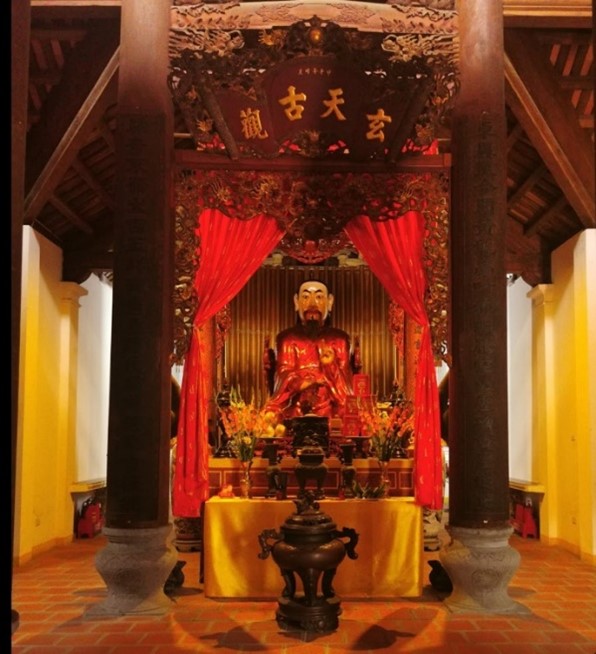
Constructed in the second year of the Than Vu era under the reign of King Ly Thanh Tong (1070), the Temple of Literature in the imperial capital of Thăng Long marked the early establishment of a national-level cultural and educational institution. Its founding reflected a significant shift in Dai Viet’s statecraft ideology, as the governing philosophy gradually transitioned from Buddhism toward Confucianism. The construction of a temple dedicated to Confucius and other Confucian sages and worthies not only affirmed the growing status of Confucianism within the political and social life of the state, but also demonstrated the Ly court’s strategic vision in building a system of civil governance grounded in Confucian thought. With the establishment of the Imperial Academy (Quốc Tử Giám) in 1076, the Temple of Literature - Imperial Academy became the highest educational center of the realm, responsible for the training of royal descendants and officials’ sons, and later expanded to include outstanding Confucian scholars from across the country. At the same time, it functioned as a major ceremonial site of the court, where important scholarly rites were conducted, most notably the sacrificial ceremony in honor of Confucius - the Sage revered as the “Teacher of Ten Thousand Generations” (Vạn thế sư biểu). According to the Đại Việt sử ký toàn thư (The Complete Annals of Dai Viet): “In the Can Tuat year, the second year of the Than Vu era (1070), in the autumn, eighth month, the Temple of Literature was built; statues of Confucius, the Duke of Zhou, and the Four Associates were installed; portraits of the Seventy - Two Worthies were painted; sacrifices were offered in all four seasons. The Crown Prince came here to study.” The Ly dynasty’s decision to construct the Temple of Literature and to institutionalize the worship of Confucius and Confucian sages laid a foundational cornerstone for the moral and intellectual tradition of Dai Viet, opening a lasting current of Confucian learning. From that point onward, successive Vietnamese dynasties consistently regarded the civil service examination system as inseparable from the veneration of Confucius, thereby embedding Confucian values deeply within the structures of state governance and education.
During the Tran dynasty, in the Quy Suu year, the third year of the Nguyen Phong era (1253), Emperor Tran Thai TOng ordered the establishment of the National Academy (Quốc Học Viện). Statues of Confucius, the Duke of Zhou, and the “Secondary Sage” (Mencius) were erected, and portraits of the Seventy - Two Worthies were painted for purposes of veneration.
During the Le dynasty, in the At Mao year, the second year of the Thieuj Binh era (1435), Emperor Le Thai Tong ordered the Junior Preceptor (Thiếu bảo) Le Quoc Hung to conduct sacrificial rites in honor of Confucius, the First Teacher (Tiên sư), on a Dinh day; from that time onward, the ceremony was observed as a regular practice. In the sixth year of the Quang Thuan era (1465), Emperor Le Thanh Tong institutionalized the rites at the Temple of Literature in the various in the various trấn (provincial jurisdictions) and lộ (administrative circuits), stipulating that sacrifices be conducted on Dinh days in both the spring and autumn seasons. In the fourteenth year of the Hong Duc era (1483), Emperor Le Thanh Tong ordered the construction of the Dai Thanh Hall, the erection of the Eastern and Western Annexes (Đông vu and Tây vu) at the Temple of Literature, along with the Canh Phuc Hall, a woodblock printing repository, a storehouse for ritual paraphernalia, and the eastern and western corridors of the Minh Luan Hall.
By the Nguyen dynasty, the establishment of regulations governing the construction of the Temple of Literature and the conduct of sacrificial rites had become fully institutionalized within the court’s official statutes and precedents. In 1803, Emperor Gia Long ordered the creation of a nationwide system of Temples of Literature across the various in the various dinh (provincial administrative units) and trấn (provincial jurisdictions), thereby progressively completing the network of Confucian temples throughout the country. At that time, the Temple of Literature emerged as one of the most important ritual sites administered by provincial authorities at the local level. In the eighteenth year of the Minh Menh era, the Ministry of Rites deliberated upon the ceremonial protocols for sacrifices at the Temple of Literature and submitted them for imperial approval. Upon ratification, these regulations served to standardize the sacrificial rites conducted at both the imperial Temple of Literature in the capital and the provincial Temples of Literature throughout the realm.
Sacrificial rites constitute a fundamental component of the Confucian ritual canon (Lễ), embodying profound philosophical and ideological values. The Book of Rites (Lễ Ký), in the chapter Ji Tong (Tế Thống), states: “In the governance of the people, nothing is more important than ritual. Of the five major categories of ritual, none is more significant than sacrificial rites.” Sacrificial ceremonies were accorded particular importance not only as acts of reverence toward the spirits and prayers for blessings, or as expressions of filial piety toward ancestors, but also for their inherent pedagogical function. Transcending the sphere of mere religious practice, sacrificial rites articulated and reinforced core humanistic and ethical values within the Confucian tradition. Accordingly, in establishing institutions of learning, the ancients invariably performed sacrifices to the former sages and former teachers, thereby affirming cultural origins, honoring moral exemplars, and encouraging the pursuit of learning.

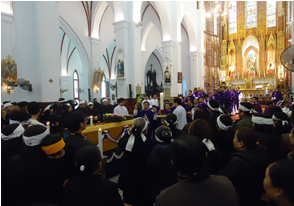
Image of the sacrificial ceremony at the Temple of Literature–Imperial Academy, Hanoi, conducted by the Ritual Committee of Nhan My School
According to the Lễ Ký Chính Nghĩa (Correct Meaning of the Book of Rites) and related sources, the Shidian rite (Thích điện) performed in educational institutions comprised a total of seven forms, including seasonal sacrifices, sacrifices upon the establishment of a school, sacrifices conducted upon a teacher’s return, and sacrifices held when the ruler paid an inspection visit to the school. In A Discourse on Ritual (Lễ Luận), Xunzi maintains that the core meaning of Ritual (Lễ) may be reduced to three fundamental elements: Heaven and Earth, Ancestors, and Ruler and Teacher (Quân sư). Heaven and Earth are regarded as the source of life; ancestors as the origin of lineage and kinship; and the ruler and teacher as the foundation of social stability. Accordingly, ritual serves to venerate Heaven above and Earth below, honor the ancestors, and solemnly affirm the authority of the ruler and the teacher - these constituting the three foundational pillars of Ritual. Within this tripartite structure, the Shidian rite belongs to the category of Ruler and Teacher. It is precisely for this reason that, in antiquity, the governance of the state and the operation of educational institutions were closely intertwined. The historical development of school rituals culminating in sacrifices to Confucius reflects a long and complex process through which the status of Confucius and Confucian scholars was defined and consolidated in Chinese society in particular, and in societies influenced by Confucianism more broadly. At the national level, the sacrificial rites conducted at the Temple of Literature were clearly and intimately connected with the earlier ritual practices carried out in educational institutions, and may be understood as a sustained expression of the ethos of reverence for teachers and respect for learning, as well as the transmission of civilization. It may be argued that sacrificial practices at the Temple of Literature further accentuated their humanistic dimension: they functioned not only to promote traditional Confucian moral values but also exerted a significant influence on the formation of social trust within traditional society. Although ritual forms evolved over time - from school-based sacrifices to those conducted at the Temple of Literature - the Confucian understanding of sacrifices to Confucius consistently emphasized reverence for the Dao and the exaltation of the Sage, rather than the worship of spirits or the deification of Confucius himself. This orientation foregrounded the humanistic consciousness inherent in the rituals of the Temple of Literature, while rendering their religious character comparatively muted. From this perspective, sacrifices to Confucius may be seen as expressions of esteem for the values he established, through which social order and stability were sought. Whether in ancient educational institutions or in the rites of the Temple of Literature, both ritual form and purpose remained firmly oriented toward the practical realities of society rather than toward a mystical or otherworldly realm. The principle of educational transmission was further manifested in the practice of jointly venerating Confucian sages alongside Confucius, a practice that received official recognition across successive dynasties. The formation of this system of worship was grounded both in ancient ritual norms and in the sustained efforts of later generations of Confucian scholars, gradually crystallizing into the normative model for the ritual system of the Temple of Literature in subsequent periods.
Although each dynasty incorporated different eminent Confucian scholars into the subsidiary worship of the Confucian temple system, one commonality may be observed: none of those venerated lacked exemplary distinction in both literary achievement and moral cultivation. The essence of Confucian thought was thus transmitted and continually deepened through the intergenerational succession of Confucian scholars. In this light, the Temple of Literature may be understood as a symbolic representation of an educational system centered upon Confucius, with Confucian sages arrayed around him. Consequently, worship within the Temple of Literature transcended the function of a religious or cultic site; rather, it assumed profound significance within traditional society, serving as an institutional embodiment of moral education, cultural continuity, and the Confucian ideal of social order.
In other words, Confucian sacrificial rituals function primarily as an outward form, whereas the preservation of moral sentiment among the people and the consolidation of the ethical order of society constitute the true aims and purposes of ritual. Accordingly, sacrificial practices conducted within educational institutions, and later within the Temple of Literature, consistently centered upon the task of moral instruction and transformation. This pedagogical function is most clearly manifested through the system of ritual subjects enshrined therein. Confucius is revered as the founder of the tradition; however, the continuity and development of Confucian learning would have been impossible without the successive contributions of later scholars - beginning with Confucius’ own disciples, and subsequently extending to eminent Confucian masters who devoted themselves to transmitting and elaborating the Way. For this reason, successive dynasties incorporated virtuous and learned figures who had rendered meritorious service to the transmission of Confucian learning into the ritual system, thereby constructing exemplary “models” for emulation by later generations. From the Confucian perspective, sacrifices to former sages and former teachers constituted a means of cultivating moral trust within traditional society. This conception was not confined to China alone, but spread widely and exerted profound influence upon other societies sharing a common written and cultural tradition, including Vietnam.
In the contemporary context, as the spirit of reverence for teachers and respect for learning has been to some extent eroded by the pace of modern life, and as many traditional cultural values have gradually faded due to gaps in classical knowledge, the restoration of a ritual imbued with symbolic significance within the space of the Temple of Literature or within educational institutions may serve to awaken contemporary consciousness. Such practices have the potential to rekindle the noble values bequeathed by earlier generations - values long obscured by the passage of time./.