 Làng nghề
 Di tích văn hóa & lịch sử






♦ M.A. Dang Thi Anh Tuyet
thuongChua Huong Pagoda has long been recognized as one of the most emblematic symbols of Vietnamese spiritual life and folk belief culture. Beyond its reputation as a scenic complex defined by harmonious mountains and waterways, Chua Huong Pagoda is also a sacred pilgrimage destination, where people seek inner peace, immerse themselves in nature, and pause within a space shaped by long-standing cultural and historical layers. Each spring, Chua Huong Pagoda welcomes millions of visitors from across the country, creating a vivid picture of faith, festivals, and national tradition.
Chua Huong Pagoda, also known as Huong Son, is located in Huong Son Commune, Hanoi City, about 60 km southwest of the capital center. It is not a single pagoda, but a vast cultural and spiritual complex consisting of dozens of pagodas, temples, communal houses, shrines, and caves scattered across the Yen Stream valley and the Huong Son limestone mountain range.
At the heart of the complex are Thien Tru Pagoda (also called the Outer Pagoda) and Huong Tich Cave (the Inner Pagoda), famously praised as “Nam thien de nhat dong.” The entire Chua Huong Pagoda scenic area presents a harmonious combination of Buddhist architecture and majestic natural landscapes, forming a space that is at once sacred, poetic, and deeply contemplative.
Historical records indicate that Chua Huong Pagoda took shape in the late 17th century during the Later Le period. In 1686, the monk Tran Dao Vien Quang discovered Huong Tich Cave and initiated the construction of worship structures there. In 1770, Lord Trinh Sam, during a sightseeing trip, inscribed the five characters “Nam thien de nhat dong,” affirming the cave’s distinctive beauty and value.

Chua Huong Pagoda is closely associated with the worship of Bodhisattva Quan Am, a symbol of compassion and salvation. In Vietnamese consciousness, a pilgrimage to Chua Huong Pagoda is not only about praying for prosperity, good fortune, and safety, but also a journey of self-cultivation, moral aspiration, and the search for balance in spiritual life.
Through many historical upheavals, Chua Huong Pagoda has preserved its core cultural, religious, and architectural values, becoming one of the largest Buddhist centers and festival destinations in northern Vietnam.
One of the most distinctive features that shapes Chua Huong Pagoda’s appeal is its unique travel route. Visitors typically begin by taking a boat ride along Yen Stream, a waterway of about 4 km that winds gently through layers of mountains, bordered by seasonal reed fields and water lilies.
On the boat, visitors can fully experience the serene beauty of nature, listening to the soft splash of oars on the water, blending with the wind and forest birdsong. In spring, both banks glow with blossoms, forming a romantic and lyrical landscape; in autumn, the scenery turns quiet and introspective in its own distinctive way.

After reaching the landing, visitors continue on foot or by cable car to the spiritual sites throughout the complex. Each step feels like a moment of inward stillness, returning to the self and moving closer to Buddhist teachings.
Among the main centers of religious activity is Thien Tru Pagoda, one of the largest and most important pagodas in the Chua Huong Pagoda complex and the venue for key ritual practices. The pagoda stands on a broad, level area, surrounded by protective mountains that create a balanced geomantic setting.
Its architecture reflects traditional Vietnamese Buddhist style, featuring a three-entrance gate, a bell tower, a front hall, and a rear sanctuary arranged in a harmonious layout. The atmosphere at Thien Tru is both solemn and approachable, offering visitors a place to worship, rest, and prepare before continuing the journey to Huong Tich Cave.
Huong Tich Cave, known as “Nam thien de nhat dong,” is widely regarded as the spiritual soul of Chua Huong Pagoda. To enter the cave, visitors must complete a relatively long mountain climb, and this very journey carries symbolic meaning as a test of endurance, patience, and sincerity.
Inside lies a vast cavern with a system of natural stalactites shaped into striking forms, associated with folk names such as Nui Co, Nui Cau, Gieng Ngoc, Cay Vang, and Cay Bac. Each formation was linked by earlier generations to aspirations for happiness, children, prosperity, and fulfillment in life.
This blend of nature’s mystical beauty and deep spiritual belief has made Huong Tich Cave one of the most sacred destinations in the Vietnamese imagination.
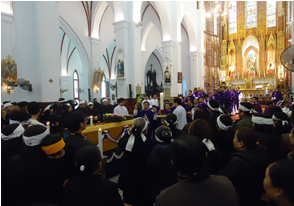
Visiting Chua Huong Pagoda also means encountering the Chua Huong Pagoda Festival, one of Vietnam’s longest and largest festivals. It begins on the sixth day of the first lunar month and lasts through the end of the third lunar month. The festival is not only an occasion for Buddhist pilgrimage, but also a distinctive space for community cultural life.
During this period, streams of people eagerly join the festivities, contributing to an atmosphere that is lively yet still marked by solemnity and devotion. The Chua Huong Pagoda Festival vividly reflects Vietnamese spiritual life, a tradition of moral aspiration, and long-standing cultural continuity.
Today, Chua Huong Pagoda is not only a spiritual pilgrimage site but also a major cultural and eco-tourism destination of Hanoi and the country. Improvements in infrastructure and tourism services have made access and experience more convenient, while the area still retains the unspoiled quality of its natural landscape.
Chua Huong Pagoda also offers people an opportunity to step away from the noisy rhythm of urban life, return to a tranquil setting, and reflect on themselves and on life. Whether visiting during the bustling festival season or in quieter periods, each journey to Chua Huong Pagoda brings a distinctive and unforgettable emotional experience.
More than a famous scenic site, Chua Huong Pagoda stands as a symbol of the Vietnamese spiritual journey, a journey back to origins, toward better values, and toward inner serenity. Amid magnificent mountains and waters, the echo of temple bells, and the silent flow of Yen Stream, Chua Huong Pagoda appears as a sacred land where people can set down their worries, rediscover peace, and renew their faith in life.
-----------------------------------------------------------------------
REFERENCES
1. Tran Thi Tuyet Mai - Hanoi University of Culture (23/02/2022). The cultural beauty of the Chua Huong Pagoda Festival in the past. - https://smot.bvhttdl.gov.vn/net-dep-van-hoa-le-hoi-chua-huong-ngay-xua/.
2. Thai Nguyen Newspaper (2009). Impressions of Chua Huong Pagoda. https://baothainguyen.vn/van-hoa/200902/cam-nhan-tu-chua-huong-3674791/
3. ACC Hanoi (07/02/2025). A brief history of Huong Tich Pagoda, Hanoi. https://acchanoi.vn/lich-su-chua-huong-tich-ha-noi/
4. Son Duong (2023). The Huong Son relic and scenic complex (My Duc District). https://nguoihanoi.vn/quan-the-di-tich-danh-thang-huong-son-huyen-my-duc-76350.html
5. MA Nguyen Tri Son (2006). Huong Tich Pagoda. Cultural Heritage Magazine, Issue 96.