 Làng nghề
 Di tích văn hóa & lịch sử






♦ PhD. Le Thi Cuc
Lang Pagoda is a representative heritage site of Thang Long - Hanoi. The monument was built during the Ly Dynasty, a period when Buddhism flourished and exerted profound influence on architecture, ideology, and social life. More than a religious structure, Lang Pagoda is a cultural space that crystallizes Ly-era values and is closely associated with Zen Master Tu Dao Hanh.
The formation history of Lang Pagoda and the legend of Zen Master Tu Dao Hanh
Lang Pagoda is also known by other names such as Chieu Thien Pagoda or Ca Pagoda. According to the Tuc Le stele still preserved at the pagoda, the temple was constructed during the reign of Ly Anh Tong (1138–1175). The formation of Lang Pagoda is linked to Zen Master Tu Dao Hanh, a legendary figure in the history of Vietnamese Buddhism, who left behind valuable legacies, especially in culture, belief practices, and medicine. He is remembered as a Zen monk and ascetic believed to possess extraordinary spiritual powers and transformative abilities. Locals also venerate him as Duc Thanh Lang and worship him as a saint.
Some sources state that Tu Dao Hanh belonged to the 12th generation of the Ti Ni Da Luu Chi Zen lineage. According to folk accounts, he was regarded as the son of Sung Hien Hau and was established as King Ly Than Tong. Tradition also holds that Zen Master Tu Dao Hanh was reborn as King Ly Than Tong, while Zen Master Giac Hai (also known as Giac Hoang) was reborn as the monk Dai Dien. The historical chronicle Dai Viet su ky toan thu records details of Tu Dao Hanh’s life, including an entry noting that in 1116 he “left his body” at a pagoda in the Thach That mountain area; shortly thereafter, the wife of Sung Hien Hau, a woman of the Do family, gave birth to a son named Duong Hoan. Because of this legend, Ly Anh Tong, the son of Ly Than Tong, ordered the construction of Chieu Thien Pagoda to worship his father (whose previous incarnation was said to have been Zen Master Tu Dao Hanh).
Lang Pagoda underwent multiple restorations, including in Thinh Duc 4 (1656), Canh Tri 4 (1666), Tu Duc 22 (1869), and Thanh Thai 13 (1901), among others. Across dynasties, the temple’s appearance changed considerably, yet it has remained on its original site, preserving the ancient aura of one of Thang Long’s most renowned landmarks.
Ly - Dynasty cultural imprints at Lang Pagoda
thuonTangible cultural heritage
Ly-Dynasty cultural imprints at Lang Pagoda are clearly reflected in both tangible and intangible values. In tangible terms, the pagoda’s architectural space bears the characteristics of a Northern Vietnamese village pagoda, featuring a harmonious layout closely connected with the landscape and community life.
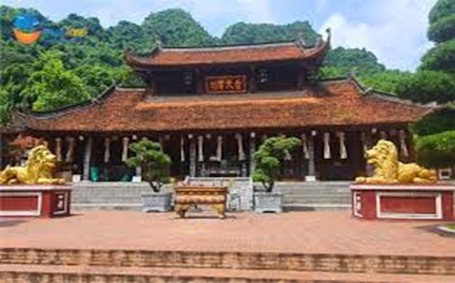
Lang Pagoda is a large-scale architectural complex organized according to the traditional “noi cong ngoai quoc” layout, reflecting a spatial mindset typical of medieval Buddhist architecture. The complex includes key components such as the Tien Duong, Phuong Dinh, Trung Duong, Thieu Huong, and Thuong Dien. Flanking the Thuong Dien is a corridor system; to the rear are the Bell House, the Khanh House, the Mother Goddess Shrine, the Patriarch House, along with a stupa garden, forming an enclosed, balanced, and solemn space.
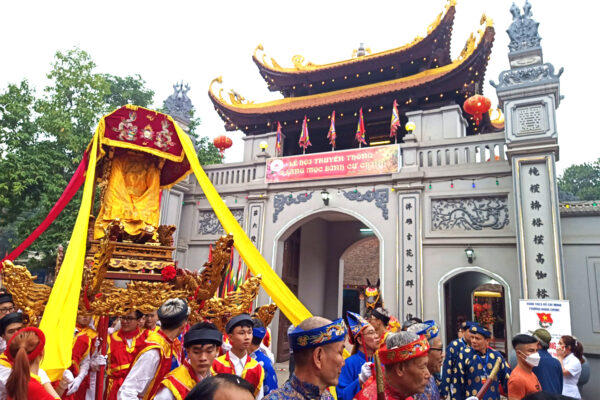
The first architectural focal point is the entrance gate, featuring four square pillars and three curved roofs attached to the pillar frames, with the central roof higher than the two side roofs, evoking associations with Ly-era court architecture. Beyond the gate lies a spacious brick courtyard, where a stone platform is placed at the center to hold ceremonial palanquins during festival days. Next is the tam quan system and an octagonal house that enshrines the statue of Zen Master Tu Dao Hanh. Passing the octagonal house, visitors reach the main structures such as the Bai Duong, the Thieu Huong House, the Thuong Dien, corridor wings, the Patriarch House, and monks’ quarters. The overall design demonstrates a tight connection between architectural space and belief practices, thereby highlighting the Ly-Dynasty cultural imprint at the site.

Figure 1. Lang Pagoda Gate (Collected photo)
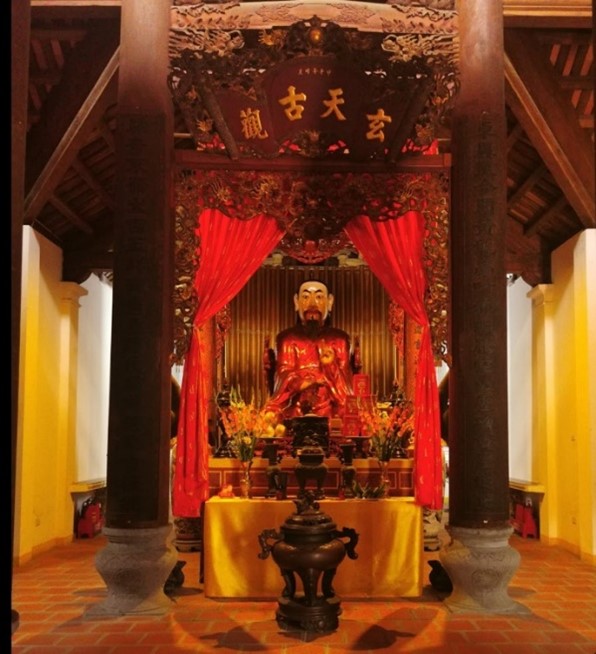
Matching its architectural scale, Lang Pagoda preserves a rich and diverse collection of artifacts, including steles, bell inscriptions, khanh instruments, horizontal lacquered boards, parallel sentences, carved ceremonial panels, imperial decrees, and a system of worship statues. Together, these materials clearly reflect the site’s continuous existence and development across multiple historical periods. Most notable is the statue of Zen Master Tu Dao Hanh housed in the octagonal structure. Tradition holds that the statue dates back to the Ly period; during the Le era (approximately 1644–1646), it underwent major restoration, and in January 2005 it was comprehensively restored again.
Although many artifacts have been repaired or supplemented in later periods, the sculptural style and worship arrangement at Lang Pagoda continue to preserve aesthetic features strongly influenced by Ly-era Buddhism. These include a preference for refined and balanced forms, restrained decoration, and a harmonious integration of Buddhist symbolism with indigenous beliefs. The worship statue system, especially the statue of Zen Master Tu Dao Hanh, not only carries artistic value but also expresses the humanistic outlook of Ly Buddhism, where human beings were placed at the center of spiritual life. Through these artifacts and symbols, Lang Pagoda emerges as a cultural space that crystallizes both material and spiritual values, helping affirm the distinctive imprint of Ly-Dynasty culture in the history of Vietnamese Buddhism.
Intangible cultural heritage
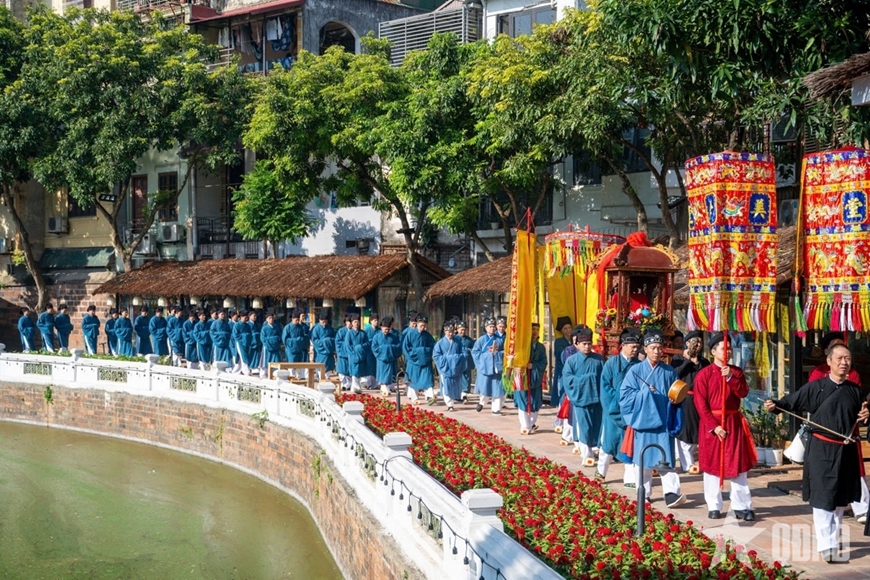
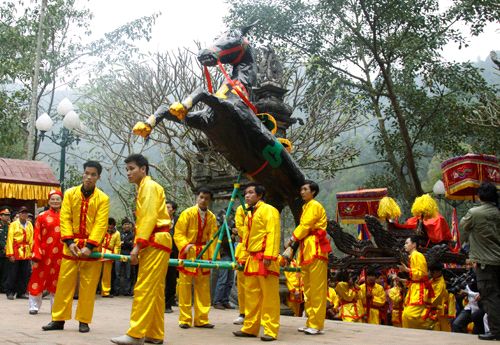
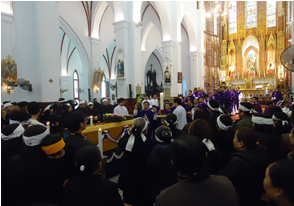
Lang Pagoda is not only an architectural relic but also a space that preserves and continues the cultural and spiritual values of ancient Thang Long. Intangible Ly-era cultural imprints at Lang Pagoda are vividly expressed through festivals and belief practices associated with the life and legacy of Zen Master Tu Dao Hanh, reflecting the syncretism between Buddhism and folk belief, a notable characteristic of Ly-era religion. The Lang Pagoda Festival is held on the seventh day of the third lunar month, commemorating the birth of Zen Master Tu Dao Hanh. It features a palanquin procession from Lang Pagoda to Hoa Lang Pagoda (Dich Vong Commune), where his biological father is worshipped, demonstrating a close connection among Buddhist devotion, ancestor veneration, and filial piety in traditional culture. The festival’s influence is reflected in a folk verse: “Nho ngay mong bay thang ba/Tro ve hoi Lang, tro ra hoi Thay.” This illustrates Lang Pagoda’s deep role in community belief life. Beyond the festival, regular worship activities at the pagoda further affirm its position as an important cultural and spiritual center of Hanoi.

Figure 2. Lang Pagoda Festival (Collected photo)
It can be affirmed that Lang Pagoda is a monument strongly marked by Ly-Dynasty cultural imprints, a place that crystallizes the distinctive values of Ly-era Buddhism. In particular, the figure of Zen Master Tu Dao Hanh occupies a central role in shaping the pagoda’s historical meaning and sacred identity. From a historical monk, he was elevated into a sacred figure in folk belief, clearly reflecting a key feature of Ly Buddhism: closely connected to the royal court while also deeply integrated into village life. Lang Pagoda is not only a place of worship but also a space preserving community historical memory across centuries. Today, Lang Pagoda continues to play an important role as a representative historical and cultural heritage site of Hanoi, helping contemporary generations better understand the value of Ly Buddhism and the significance of preserving and promoting national cultural heritage./.
-----------------------------------------------
REFERENCES
1. Dai Viet su ky toan thu (Ngo Duc Tho, translator and annotator) (1998), Volume I. Social Sciences Publishing House, Hanoi.
2. Thich Bao Nghiem (1991), “Lang Pagoda and the legend of Zen Master Tu Dao Hanh,” Buddhist Studies, Issue 3-1991, pp. 60–62.
3. Nguyen Huu Son (2000), “Zen Master Tu Dao Hanh - from Lang Pagoda to Thay Pagoda,” Song Huong Magazine, Issue 10-2000, pp. 5–8.
4. Vietnam Committee for Social Sciences (1978), Collection of Hanoi Steles, Volume 1, Section 21. The Tuc Le Stele of Chieu Thien Pagoda, Social Sciences Publishing House, Hanoi.
5. Lang Pagoda (Hanoi) worshipping Zen Master Tu Dao Hanh, https://tapchinghiencuuphathoc.vn/chua-lang-ha-noi-tho-thien-su-tu-dao-hanh.html, updated 17/12/24.