 Làng nghề
 Di tích văn hóa & lịch sử






♦ PhD. Le Thi Cuc
thươngBuddhism is one of the major religions in Vietnam, with a long history and profound influence on Vietnamese social and spiritual life. In Hanoi, a land closely associated with the history of Thang Long, Buddhism was formed prior to the Ly Dynasty, flourished under the Ly and Tran dynasties, continued its religious practices through the Le and Nguyen dynasties, and remains an important component of the spiritual life of Hanoians today. Through its system of pagodas, festivals, and belief practices, Buddhism has exerted deep influence on ideology, ethics, lifestyles, and customs of Hanoi residents.
The formation and development of Buddhism in Hanoi
Buddhism originated in India and later spread to countries across East and Southeast Asia, including Vietnam. It is believed to have been introduced into Vietnam around several centuries before or after the Common Era. Although scholarly opinions differ, historical records suggest that Buddhism first arrived in Vietnam around the second century. At that time, Indian monks traveled by sea with merchant ships to Luy Lau (the Dau area), now part of Thuan Thanh District, Bac Ninh Province, where the Dau Buddhist lineage was formed. “This is considered the foundational layer of Vietnamese - Indian Buddhism, predating the introduction of Chinese Buddhism.”[1] From the ninth century, marked by the establishment of the Kien So Buddhist lineage at Kien So Pagoda [2] to the thirteenth century with the emergence of the Truc Lam Zen School, Buddhism in Hanoi gradually shaped its identity and development orientation throughout history.

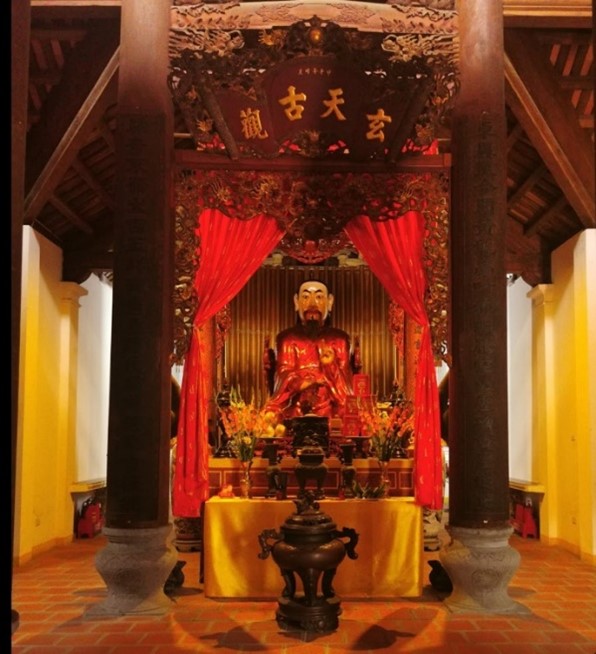
Statue of Zen Master Vo Ngon Thong at Kien So Pagoda (Collected photo)
Although Hanoi was not the earliest area where Buddhism was introduced, the development of Buddhism there can be clearly traced from the Ly Dynasty. To date, Buddhism in Hanoi has experienced various periods of prosperity and decline. The presence of Buddhism in Thang Long - Hanoi is closely linked to monks who were either natives of Thang Long - Hanoi or monks from other regions who made significant contributions to the development of Buddhism in the capital.
During the Ly Dynasty, Buddhism flourished in Thang Long, the political, economic, and cultural center of the country. Ly kings were deeply devout and elevated Buddhism into an ideological foundation aligned with political governance. Prominent Zen masters of this period included Van Hanh and Da Bao. Thang Long became a center of multiple Buddhist lineages, particularly the Kien So lineage, alongside other traditions and the influence of Esoteric Buddhism, the worship of De Thich, and Avalokiteshvara. The phenomenon of the unity of the Three Teachings emerged, with Buddhism holding a dominant position while absorbing strong influences from Chinese Buddhism, clearly reflected in metaphysical concepts such as Being and Non-Being and the One Vehicle doctrine.
Under the Tran Dynasty, Buddhism continued to hold the status of state religion. While Ly kings built many state pagodas in Thang Long, Tran kings focused on constructing state pagodas in Yen Tu. During the Ly period, the Thao Duong Zen School, originating from China, appeared. The Dau and Kien So lineages gradually merged into a unified Zen tradition. Although Thang Long had many monks of aristocratic origin, including kings, it was at that time the second largest Buddhist center after the Dau region. “However, during the Tran period, the Yen Tu Buddhist center of the Tran kings rose to become the most prominent, surpassing other centers, as a king who became a Buddha figure assumed leadership of the Truc Lam Zen School”. [3] In the context of resistance wars against the Mongol invasions, Buddhism in Thang Long during the Tran period emphasized independence, built fewer new pagodas and towers, yet continued to play an important role in spiritual life, laying the groundwork for later transformations under the Le Dynasty.
During the Early Le period, Confucianism assumed a dominant position, causing Buddhism in Thang Long to exist primarily within popular religious life rather than the royal court, and to lose the vitality seen during the Ly and Tran periods. The court focused on building the Temple of Literature, erecting doctoral steles, and developing the civil service examination system. Nevertheless, Buddhist practices were maintained through the restoration and construction of certain pagodas such as Thanh Dam and Chieu Do. By the Later Le Restoration period in the seventeenth century, Buddhism showed signs of revival, although Confucianism continued to dominate the ideological framework of society.
After the establishment of the Nguyen Dynasty and the relocation of the capital to Hue, Hanoi no longer served as the political center but became a provincial city. Hue emerged as the national center of Buddhism. Nguyen emperors imposed certain restrictions on Buddhism in Northern Vietnam due to the lingering influence of the Le kings and Trinh lords over Buddhist clergy in the region, which was politically disadvantageous to the Nguyen rulers. As a result, although Buddhism developed in Hue and some other provinces, Buddhism in Hanoi was relatively constrained, with significantly fewer pagodas constructed compared to Hue.
From the late nineteenth to the early twentieth century, as Vietnam became a French colony and Hanoi emerged as a site of East - West cultural interaction, Buddhism entered a transitional modern period marked by significant change. From the 1930s, Hanoi monks actively participated in the Buddhist Revival Movement, notably through the establishment of the Bac Ky Buddhist Association in 1934 and monastic organizations based at Quan Su Pagoda. These efforts gradually reaffirmed the position of Hanoi Buddhism within national Buddhism. In 1942, also at Quan Su Pagoda, the Northern Vietnam Sangha Rectification Association was established [4] .
After 1945, and especially following national reunification, Vietnamese Buddhism gradually unified its organizational structure nationwide. From 1981 to the early twenty - first century, several National Congresses of the Vietnam Buddhist Sangha were held in Hanoi in 1981, 1987, 1992, 1997, and 2002, among other years. These events affirmed the role of the capital in contemporary Buddhist life, with Quan Su Pagoda serving as the central Buddhist headquarters of the country.
Characteristics of Buddhism in Hanoi
Over thousands of years of history, Buddhism in the Thang Long - Hanoi region has developed distinctive characteristics that typify Northern Vietnamese Buddhism. First, it is Mahayana Buddhism with a clear theistic orientation. From its early introduction into Vietnam, Buddhism adopted Mahayana scriptures and soon associated the image of the Buddha with divine elements, meeting the spiritual and belief needs of the community. Within the Mahayana perspective of that time, Shakyamuni Buddha was deified. Core pre - Nagarjuna Mahayana scriptures included the Prajna Sutras, the Avatamsaka Sutra, the Vimalakirti Sutra, and the Lotus Sutra. From the outset of Buddhism’s arrival in Vietnam, Vietnamese people regarded the Buddha as a form of deity. As a result, Vietnamese Buddhist philosophy belongs to a theistic philosophical tradition.
Second, in the Thang Long - Hanoi area, popular or folk Buddhism penetrated more deeply into collective consciousness than scholastic Buddhism, marked by a pronounced theistic character. Folk Buddhism does not emphasize profound scriptural philosophy, but instead focuses on a life - centered philosophy of “saving beings from suffering,” in which Buddhas and Bodhisattvas are viewed as sacred protectors of human life. Avalokiteshvara Bodhisattva is widely venerated and closely associated with practical needs such as prayers for rain, children, and peace. Influenced by folk beliefs, even today women facing infertility often pray to the Goddess of Mercy for a child. Many pagodas in Hanoi, notably Huong Pagoda, feature altars dedicated to Co and Cau, where worshippers commonly pray for fertility.
The role of Buddhism in Hanoi
In the Thang Long - Hanoi region, pagodas occupy a central position in the cultural and spiritual life of the Vietnamese community. Through the system of pagodas and religious practices, Buddhism has profoundly influenced ideology, ethics, lifestyles, and festival customs. From the Ly Dynasty onward, Thang Long became a major Buddhist center alongside Luy Lau, with numerous pagodas closely associated with the historical development of the capital. To this day, many ancient pagodas remain across Hanoi’s inner and outer districts. Representative examples include Tran Quoc Pagoda, Dien Huu Pagoda, and Phuc Khanh Pagoda in the inner city; and Dau Pagoda, Boi Khe Pagoda, Huong Pagoda, Tram Gian Pagoda, Tay Phuong Pagoda, and Thay Pagoda in the expanded Hanoi area. This enduring presence demonstrates the sustainability of Buddhism in the spiritual and cultural life of Hanoians.

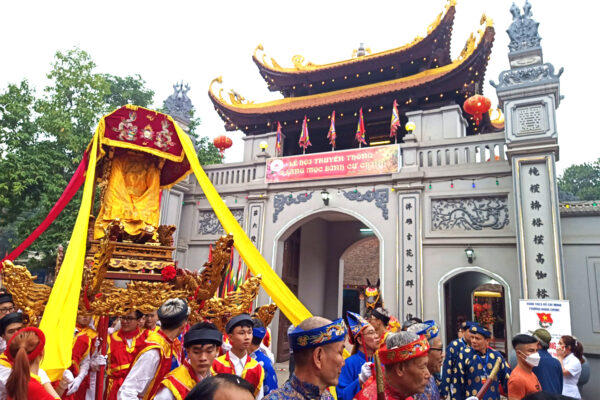
Tran Quoc Pagoda (Collected photo)
Closely linked to the formation and development of Thang Long - Hanoi, Buddhism is not only a major religion but also a crucial component of Hanoi’s cultural identity. Over centuries, Buddhism has left a deep imprint on pagoda architecture, festivals, religious practices, and the spiritual life of local residents. In the context of ongoing urbanization and modernization, correctly recognizing the historical role of Buddhism in Hanoi is of great significance. It contributes to raising awareness of the preservation and promotion of Buddhist cultural heritage values, thereby helping safeguard the cultural identity of Thang Long - Hanoi in contemporary life./.
[1] Nguyen Duy Hinh (2006), Vietnamese Buddhist Philosophy, Culture and Arts Publishing House and Institute of Culture, p. 20.
[2] Kien So Pagoda is now located in Phu Dong, Gia Lam, Hanoi.
[3] Thousand Years of Thang Long Civilization, Volume 2, Culture and Information Publishing House - Vietnam Economic Times, Hanoi, p. 2686.
[4] The Northern Vietnam Sangha Rectification Association was renamed the Northern Vietnam Sangha Association in 1945.
------------------------------------------------------------------------
References
1. Nguyen Viet Chuc, Nguyen Vinh Phuc (chief editors) (2017), Hanoi Encyclopedia - Expanded Hanoi Section, National Political Publishing House, Hanoi.
2. Nguyen Duy Hinh (2006), Vietnamese Buddhist Philosophy, Culture and Arts Publishing House and Institute of Culture, Hanoi.
3. Thousand Years of Thang Long Civilization, Volume 2, Culture and Information Publishing House - Vietnam Economic Times, Hanoi.
4. Mai Tho Truyen (2007), Vietnamese Buddhism, Religion Publishing House, Hanoi.
5. Hai Thanh, Kien So Pagoda and the Vo Ngon Thong Zen lineage, Buddhist Studies Magazine, September 2017 issue, https://tapchinghiencuuphathoc.vn/chua-kien-so-va-dong-thien-vo-ngon-thong.html, updated 19/10/17.