 Làng nghề
 Di tích văn hóa & lịch sử




♦ M.A. Dang Thi Anh Tuyet
thuongWhen mentioning Hanoi, one does not merely recall the thirty-six ancient streets and guilds, the moss-covered tiled roofs, or the poetic, leisurely pace of life; one immediately thinks of West Lake (Hồ Tây) – the largest natural lake in the Capital. It is a place where natural beauty, historical depth, and the modern breath of a transforming city converge. West Lake is not only a renowned scenic landmark but also a vital part of Hanoi's soul, intimately bound to the spiritual life, culture, and memories of many generations.
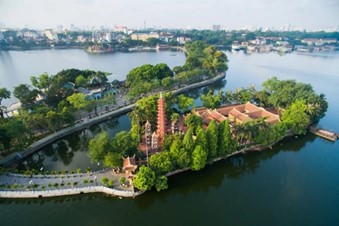
thuongIn terms of location and scale, West Lake is situated northwest of central Hanoi. Following the administrative boundary adjustments of 2025, West Lake now falls under the jurisdiction of Tay Ho Ward. Spanning approximately 500 hectares with a circumference of over 17 km, it is considered the largest natural lake within the inner city of Hanoi. Viewed from above, West Lake resembles a giant mirror reflecting the sky, the flora, and the lakeside villas, creating an expansive and cool sanctuary that is rare in the heart of a dense urban center.
thuongBeyond its scenic value, West Lake plays a crucial role in regulating the microclimate and improving the living environment of the surrounding area. The cool breezes blowing from the lake's surface into the city on sweltering summer days have earned West Lake the title of Hanoi's "green lung."

thuongThrough the flow of history, West Lake is associated with numerous legends and myths passed down from antiquity. According to folklore, the lake was once known as the "Fox Corpse Swamp" (đầm Xác Cáo), related to the legend of Lạc Long Quân slaying the nine-tailed fox spirit to bring peace to the people. Throughout various dynasties, West Lake has been known by various names such as Golden Buffalo Lake (hồ Kim Ngưu), Lãng Bạc, and Dâm Đàm (Misty Lake). Each name reflects a historical era and the evolving perception of the people toward this land.
thuongThroughout the long history of Thăng Long – Hanoi, West Lake has always occupied a special position. During the feudal era, the areas surrounding the lake were sites where royalty and mandarins constructed palaces, temples, and estates. Many of these architectural works and historical relics persist to this day, contributing to the enduring cultural value of West Lake.
thuongFurthermore, West Lake serves as a distinctive cultural and spiritual space. Surrounding the lake is a system of temples, pagodas, and shrines deeply imbued with the spiritual imprint of the Vietnamese people. Most prominent is Trấn Quốc Pagoda, regarded as the oldest pagoda in Hanoi with a history of over 1,500 years. Situated on a small peninsula on the eastern shore, it stands out with its Bảo Tháp (Precious Stupa), a sacred destination for both domestic and international visitors.
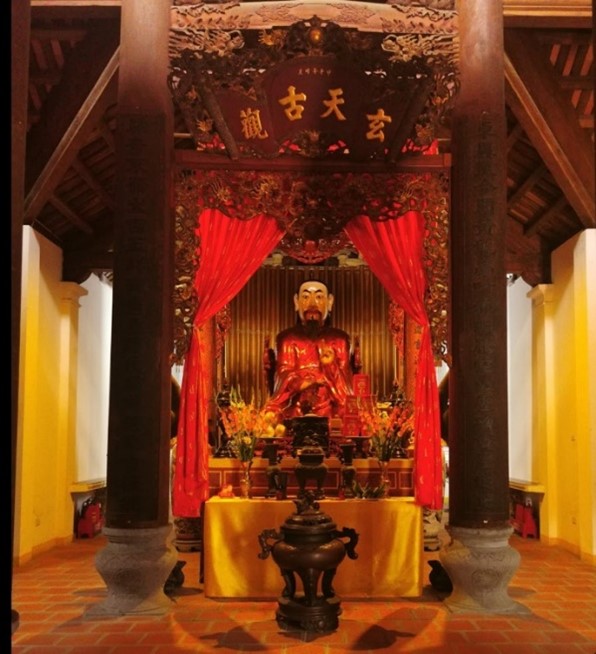
thuongTây Hồ Palace (Phủ Tây Hồ) – dedicated to the Mother Goddess Liễu Hạnh – is a paramount spiritual center of the Vietnamese Mother Goddess Worship (Đạo Mẫu). During festivals and the first and fifteenth days of the lunar month, the palace welcomes thousands of devotees seeking peace and prosperity. In addition, landmarks such as Quán Thánh Temple, Kim Liên Pagoda, and Vạn Niên Pagoda form a rich cultural-spiritual complex that deepens the intangible values of the lake.
thuongIn the modern era, West Lake remains one of Hanoi's most alluring destinations for both locals and tourists. At every moment of the day, the lake reveals a different facet of beauty. In the morning, the water is placid and the air fresh, ideal for physical activities such as walking, jogging, and cycling. In the afternoon, gentle sunlight bathes the water in gold, creating a serene and romantic vista.

thuongIn particular, the West Lake sunset is considered one of Hanoi's most sublime moments. As the sun descends behind distant skylines, the sky shifts through hues of orange, pink, and purple, shimmering across the lake's surface in an enchanting natural tableau. Many choose West Lake as a place for relaxation, reflection, or simply to reclaim balance amidst the bustling pace of life.
thuongWe cannot speak of West Lake without mentioning its characteristic culinary culture. The lakeside area is famous for dishes that have become Hanoi "brands," such as West Lake shrimp cakes (bánh tôm), snail rice noodles (bún ốc), Ngũ Xã rolled pho, steamed snails, and fried fermented pork rolls. These lakeside eateries, whether humble or modern, provide diners with a sense of intimacy and comfort, allowing them to enjoy exquisite flavors while admiring the poetic lake view.
thuongAdditionally, West Lake is a hub for numerous restaurants, cafes, and lounges of diverse styles, ranging from traditional to contemporary, and Asian to European. Sitting in a lakeside cafe, sipping a cup of coffee while watching the vast expanse of water and the flow of people is a unique experience that only West Lake can offer.
thuongBeyond being a cultural and tourism space, West Lake today is a dynamically developing area of Hanoi. Numerous urban projects, high-end residential quarters, hotels, and service centers have taken shape around the lake, modernizing the region's appearance while preserving its inherent characteristics.
thuongThe residents living around West Lake often maintain a "slow" lifestyle, closely connected to nature. Afternoon strolls and early morning exercises by the lake have become iconic images, fostering a lifestyle imbued with the elegant and gentle spirit of Hanoi.
thuongWest Lake is more than just a scenic spot; it is a symbol of the intersection between past and present, nature and humanity, tradition and modernity. Through the fluctuations of time, West Lake has quietly endured, witnessing the transformation of Thăng Long – Hanoi, preserving historical and cultural values, and evoking profound emotions in the human heart.
thuongFor Hanoians, West Lake is a place of remembrance and affection, a sanctuary for finding moments of peace amidst a chaotic life. For visitors, it is an ideal stop to experience a very different Hanoi – one that is not noisy or rushed, but deep, contemplative, and profoundly poetic.
---------------------------------------------
References
1. Dr. Architect Tran Thanh Binh (2024). West Lake – A Natural Cultural Heritage in the Hearts of Hanoians. https://vienkientrucquocgia.gov.vn/ho-tay-di-san-van-hoa-thien-nhien-trong-long-nguoi-ha-noi/
2. Nguyen Ngoc Tien (2020). The History of West Lake. https://nhipsonghanoi.hanoimoi.vn/lich-su-ho-tay-624550.html
3. Bao Han – Thao Phuong (2023). Names of West Lake (Hanoi) Through Historical Periods. https://thiennhienmoitruong.vn/ten-goi-ho-tay-ha-noi-qua-cac-giai-doan-lich-su.html
4. Vu Thi Hai Van - Vietnam National University, Hanoi (2027). Folklore Narratives Around West Lake. Journal of Vietnam Science and Technology, 59(12).
5. Nguyen Thi Thuy - Hong Đuc University (2008). Cultural Space of Tây Đô (Transformations since becoming the Western Capital). VNU Journal of Science, Social Sciences and Humanities.