 Làng nghề
 Di tích văn hóa & lịch sử






♦ M.A. Dang Thi Anh Tuyet
thuongNgoc Son Temple is not only a historical architectural work but also one of the most important cultural heritages and a symbol of the Thang Long soul - Ha Noi’s thousand-year-old civilization. As a convergence point of heaven and earth energy, it mesmerizes visitors with its ancient architectural beauty and sacred spiritual meanings. The temple is located on Ngoc Island, connected to the shore by the well-known The Huc Bridge
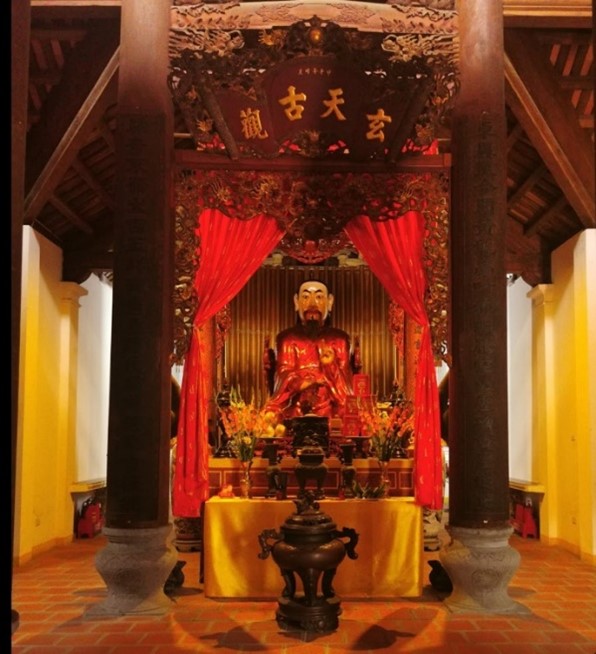
thuongIn the Ly Dynasty, the temple was named Ngoc Tuong and was later renamed Ngoc Son during the Tran Dynasty, honoring the generals who sacrificed in the resistance war against the Mongol army. Through historical upheavals, in 1865, a Confucian scholar Nguyen Van Sieu led a major renovation, building new structures such as The Huc Bridge, Nghien Pavilion, But Tower, etc., creating an architectural complex as seen today. The temple is dedicated to Van Xuong De Quan, a god of literature, examinations, knowledge, and prosperity for scholars, and Grand Lord Hung Đoo - Tran Quoc Tuan, a national hero who embodies the martial spirit, patriotism, and the indomitable will to fight invaders.
thuongThe name Ngoc Son (Jade Mountain) originates from the former name of the island on which the temple is situated. This name reflects the temple's pure, precious beauty and its spiritual meaning amid the turquoise lake. Ngọc Sơn Temple complex demonstrates a sophisticated blend of Vietnamese traditional religious architecture and Confucian philosophy, including Tam Quan Gate, But Tower, Nghien Pavilion, The Huc Bridge, and the main temple section, all of which become a unique and complete structure. The temple is built on a small island, offering a secluded sacred sanctuary while still seamlessly blending into the natural landscape of Guom Lake. Its location embodies the East Asian philosophy of integrating humans and nature. But Tower and Nghien Pavilion are the two buildings located right outside the temple gate, offering profound educational value about traditions of studiousness. But Tower is a five-story stone tower with a tip shaped like a calligraphy brush, pointing straight to the sky, symbolizing a career in literature and academia and a passion for conquering knowledge. The body of the tower bears the inscription of 3 Chinese characters: “Ta Thanh Thien” (writing on the blue sky), which reflects the strong will and ambition of scholars. Nghien Pavilion, placed under But Tower, is a slate shaped like an ink slab, supported by three stone toads. The pavilion and the tower are symmetrical, creating a complete concept of studiousness.

thuongThe Huc Bridge, the road leading to the sacred realm, is one of the most romantic and notable attractions of Guom Lake. The bridge is made of wood, painted a brilliant scarlet, and curved like a soft silk. With a name meaning “where morning sunlights rest”, the bridge faces East, where the sun rises, to catch the first light of the day, representing life and the light of knowledge. The Huc Bridge is the sole walkway linking the shore with Ngoc Son Temple Gate, leading to the temple’s sacred isolation.
thuongPast The Huc Bridge is the main temple section, starting from Dac Nguyet gate, which means “catching the moon”, placed on the West side, serving as the entrance to the temple's inner grounds. The temple is built in a traditional “công” (工) shape, including the ceremonial hall and the inner sanctuary. Tran House consists of 3 small houses behind the temple, meaning “pavilion against the waves,” with a structure of three roofs designed to shield the complex and add an aesthetic highlight.
thuongIn Ngoc Son's inner space, the preserved specimen of the largest Hoan Kiem turtle ever to live in the lake is solemnly displayed. This specimen serves as an important historical “witness” and a reminder of the essence of preserving natural and cultural heritage. The presence of the specimen allows visitors, as well as the local young generations, to have a clearer picture of the turtles that have been associated with Gươm Lake for hundreds of years, further emphasizing the sacredness of the complex.
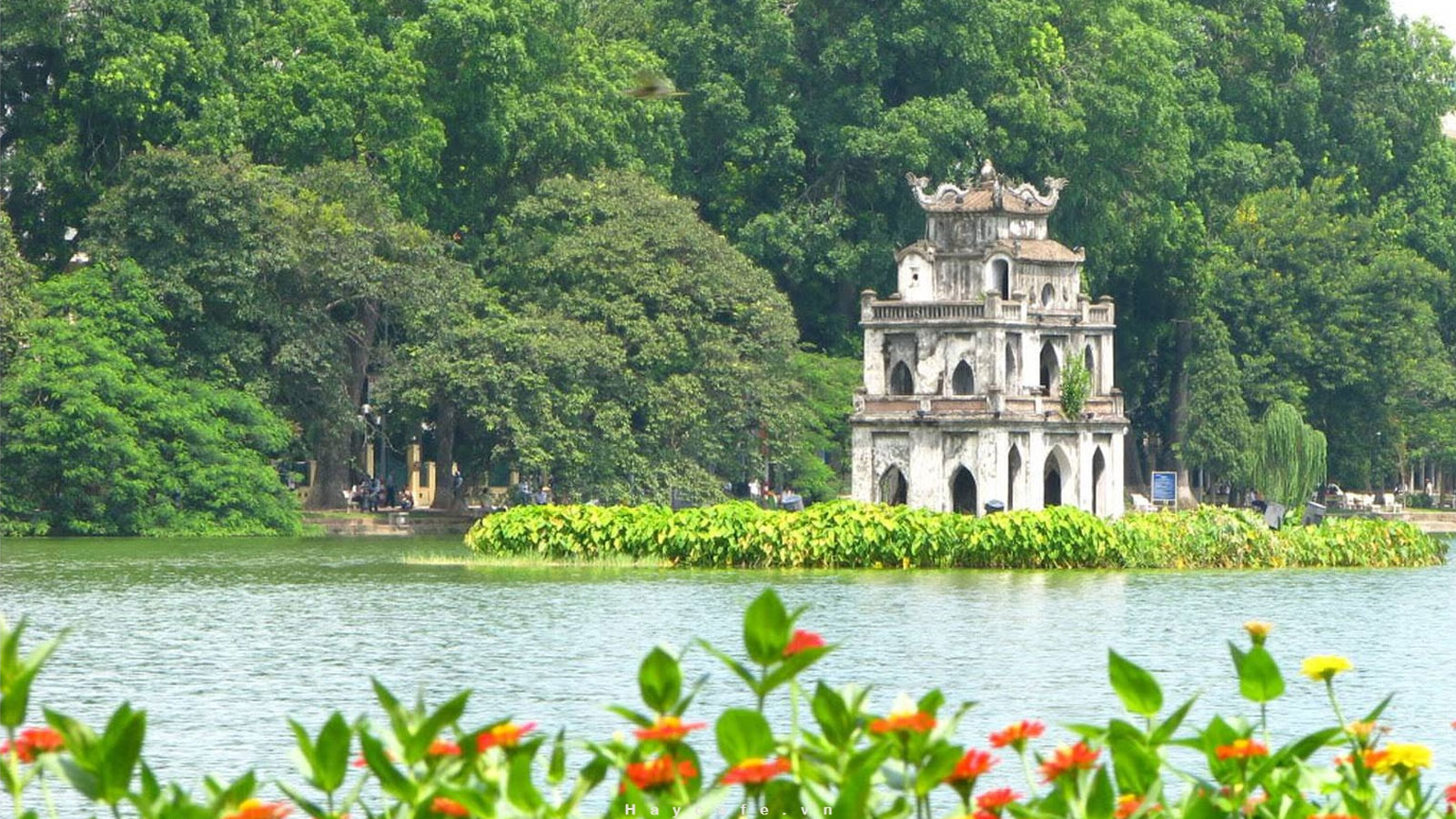
thuongIt is fair to say that Ngoc Son Temple has evolved beyond a mere place of worship and has become Ha Noi’s cultural and tourism center. The beauty of the temple lies in its perfect integration with the natural surroundings. The whole complex is a living ink-wash painting, with the scarlet The Huc Bridge standing out against the background of turquoise lakewater and deep green florals.
thuongAt every moment of the day, Ngoc Son Temple wears a different charm: vibrant under the midday sun, ethereal under the city's night lights, and melancholic in the winter mist.
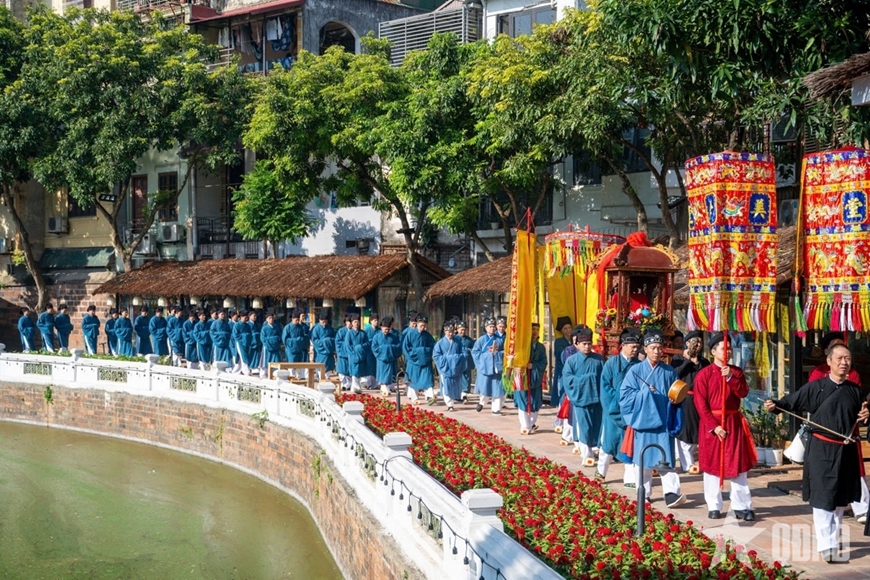
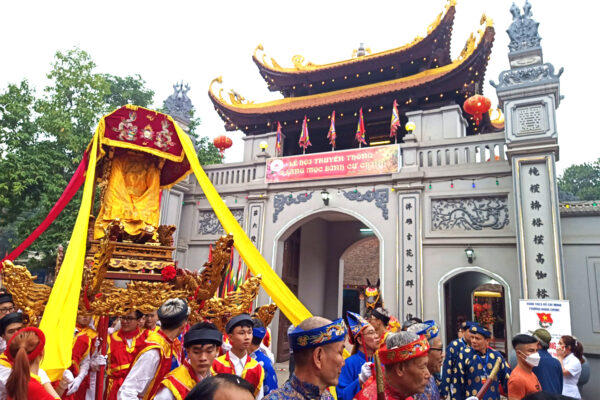
thuongNgoc Son Temple is now a focal point of Ha Noi’s walking street, attracting tourists to visit and admire its beauty. It also hosts various cultural activities, especially during traditional holidays. At the beginning of every spring, Ha Noi locals flock to the temple in order to ask for auspicious calligraphy, seeking blessings for fortune, longevity, and academic or professional prosperity.
thuongIt can be stated that this heritage holds great value in various aspects, from historical and religious to architectural and aesthetic; it is also an educational center that has taught young generations about studiousness, martial spirit, patriotism, and national cultural identity. For foreign visitors, Ngoc Son Temple is a gateway to the depths of Vietnamese culture and spirituality.
thuongNgoc Son Temple is truly a “gem” in the heart of Hoan Kiem Lake. This is not only a place to honor gods and national heroes, but also an architectural masterpiece that embodies noble human philosophies. The blend of ancient charm, sword-returning legend, and cultural value has made Ngoc Son Temple a must-visit attraction and an eternal symbol of Việt Nam’s capital.