 Làng nghề
 Di tích văn hóa & lịch sử






♦ MA Dang Thi Anh Tuyet
thuongHanoi - a land of a thousand years of civilization - is renowned not only for its profound history, scenic landscapes, and the elegant lifestyle of the Trang An people (ancient Hanoians) but also as the cradle of a culinary tradition that is refined, harmonious, and rich in identity. Hanoi's cuisine is not ostentatious or lavish; instead, it emphasizes sophistication in flavor, a harmonious balance in preparation, and a cultural depth forged through many generations. Each Hanoi dish is more than just a meal to be savored; it is a story that reflects the soul, lifestyle, and character of its people.
thuongHanoi’s cuisine took shape and evolved in tandem with the long-standing history of the Thang Long ancient capital. Over thousands of years, through the cultural intersection of various regions and historical periods, the city's culinary arts gradually reached a state of completion, carving out a distinct identity. It is a harmonious blend of the essence of folk traditions and the elegance of the royal capital. Unlike Central Vietnamese cuisine, which leans towards bold and spicy flavors, or Southern cuisine, which favors sweetness, Hanoi’s food is characterized by a moderate, subtle, and delicate taste that is never overpowering. Hanoians place great importance on the balance between sour, spicy, salty, and sweet, as well as the harmony of color, aroma, and presentation. Consequently, many Hanoi dishes, despite using simple ingredients, leave a profound and lasting impression on those who taste them.
thuongOne of the most vital characteristics of Hanoi cuisine is its refinement. This sophistication is evident in every stage, from the selection of ingredients to the methods of preparation and the art of savoring the food. The ingredients are typically familiar, readily available local products such as rice, pork, fish, and aromatic herbs, but they must be of the highest quality - fresh and in season. Spices are used in moderation to enhance the natural flavors of the ingredients, ensuring that no single element overpowers the others.
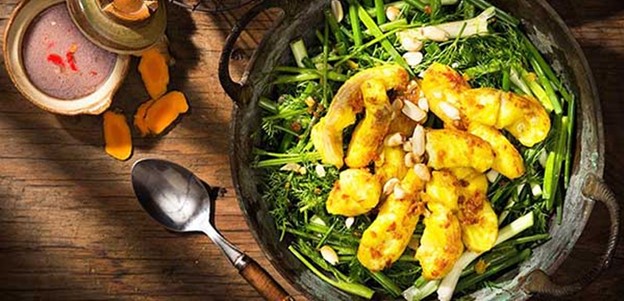
thuongFurthermore, Hanoi’s cuisine is deeply rooted in seasonality. Each season of the year brings its own signature dishes. Summer features refreshing options like bun rieu (crab rice vermicelli soup), bun oc (snail rice vermicelli soup), and canh cua (field crab soup). In contrast, winter calls for steaming bowls of pho bo (beef pho), bun thang (Hanoi chicken rice vermicelli soup), and sizzling cha la (fish with turmeric and dill). Even local snacks, such as Vong village's com (young green rice flakes), sau (Indochina dragonplum), and o mai (salted or sugared dried fruits), are linked to specific times of the year, creating a unique charm for Hanoi’s culinary landscape.
thuongAnother distinctive feature is the culinary culture of Hanoians: eating is not merely for sustenance, but for enjoyment and appreciation. In the past, Hanoians placed great importance on dining etiquette, ranging from the arrangement of the meal tray to the manner of inviting others and serving food. Although the modern pace of life has altered many habits, the hallmark elegance, moderation, and refinement in their dining traditions continue to be preserved.
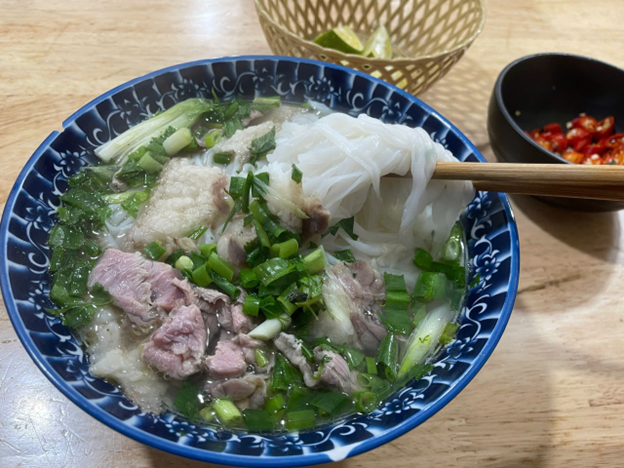
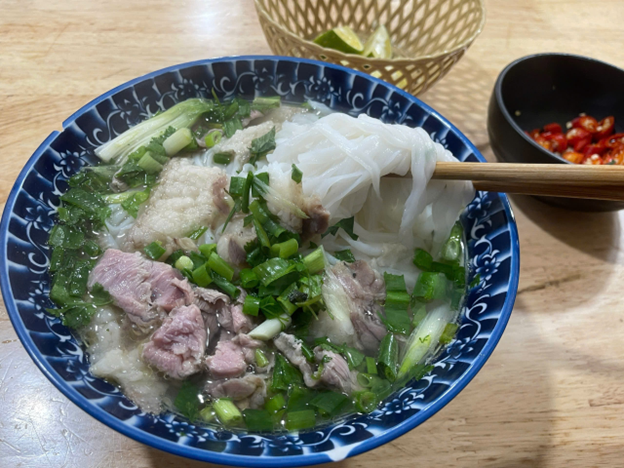
thuongWhen mentioning Hanoi’s cuisine, it is impossible not to speak of pho - a dish considered the quintessential symbol of Vietnamese gastronomy. Hanoi pho is distinguished by a clear broth with a delicate sweetness derived from long-simmered bones, soft rice noodles, and thinly sliced beef or chicken, all garnished with green onions and aromatic herbs. While the ingredients for making pho are not overly complex, the process demands meticulousness and seasoned experience at every stage of preparation to achieve the authentic flavor profile.
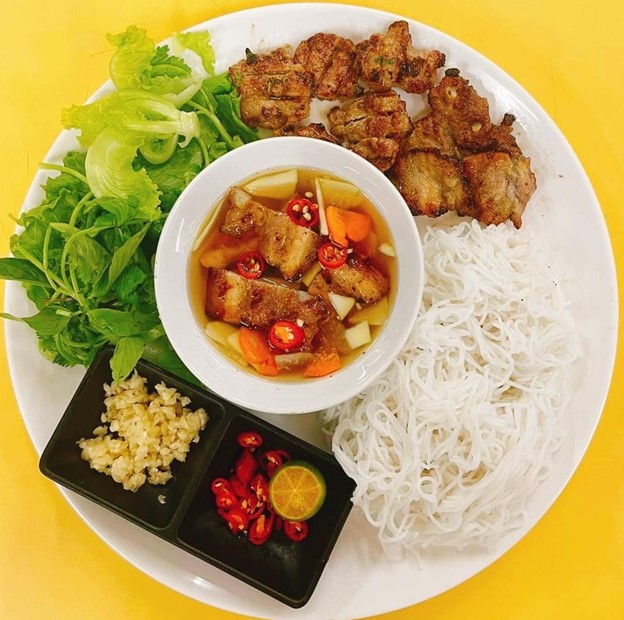
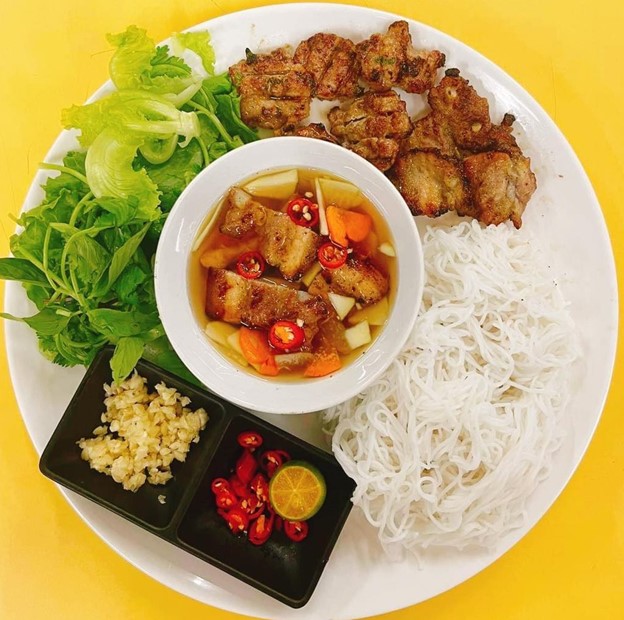
thuongAlongside pho, bun cha is another famous dish inextricably linked to the image of Hanoi. Fragrant pieces of grilled pork, served with fresh rice vermicelli, a sweet and sour dipping sauce, and an assortment of fresh herbs, have become a familiar flavor for both locals and tourists alike. This dish is also a clear manifestation of the harmony inherent in Hanoi's culinary arts.

thuongIn addition, Hanoi is famous for a variety of other dishes such as bun thang (Hanoi chicken rice vermicelli soup), cha ca La Vong (La Vong grilled fish with turmeric and dill), bun oc (snail noodle soup), banh cuon Thanh Tri (Thanh Tri steamed rice rolls), Hanoi sticky rice, and Vong Village’s com (young green rice flakes). Each dish carries its own unique story, associated with a specific landmark, a traditional craft village, or a particular historical period.
thuongBeyond main courses, Hanoi’s cuisine is also abundant in snacks and street treats. Itinerant street vendors and humble roadside stalls serving nem chua ran (fried fermented pork rolls), banh ran (Vietnamese donuts), che (sweet soups), and tao pho (tofu pudding) have become an indispensable part of the culinary life of Hanoians.
thuongIn the context of modern society, Hanoi’s cuisine is undergoing many changes to adapt to a fast-paced lifestyle and global cultural exchange. Many traditional dishes have been modified or modernized in their presentation and serving manner, yet they still retain their core flavors. An increasing number of restaurants and eateries have also emerged, contributing to the promotion of Hanoian gastronomy to international friends. However, alongside this development are dedicated efforts to preserve and protect traditional culinary values. Many families, craft villages, and culinary artisans continue to tirelessly maintain their craft, passing down secret recipes to future generations to safeguard Hanoi’s culinary identity against the wave of integration.

thuongHanoian cuisine is not simply a means of satisfying physical hunger but a profound cultural value. Through every dish, one can sense the history, lifestyle, social etiquette, and the very soul of the Hanoian people. Cuisine serves as a bond between people, a vessel for preserving memories, and a defining element of the unique identity of this ancient capital.
thuongFor travelers, Hanoi’s cuisine is one of the most alluring attractions, offering a gateway to a greater understanding and appreciation of Vietnamese culture. For Hanoians, it is a source of immense pride - an indelible memory of their homeland.
thuongHanoi’s cuisine is the crystallization of history, culture, and its people. With its hallmarks of refinement, elegance, and harmony, it has firmly established a special position within the Vietnamese culinary landscape and in the hearts of international friends. Therefore, preserving and promoting these traditional culinary values is a way to safeguard an essential part of the cultural heritage of both the capital and the nation./.