
 Làng nghề
 Di tích văn hóa & lịch sử






♦ Dr. Le Thi Thu Huong
(Continuation of part 3)
Elegance in the appreciation of arts and culture, and in leisure and recreation
Alongside the refined enjoyment of cuisine elevated into culinary art, the people of Thang Long – Hanoi have long known how to enjoy life through leisure, recreation, and the appreciation of beauty in arts and culture, placing strong emphasis on spiritual values. Nearly forty years ago, writer Bang Son discussed traditional forms of refined leisure in The Pleasures of Hanoians, such as attending theater performances and listening to music.
At present, most national-level press, media, and publishing agencies are headquartered in Hanoi. News from all regions of the country is broadcast from here via radio and television. Hundreds of newspapers and magazines, along with dozens of new book titles from nearly forty central publishing houses, are distributed nationwide and even internationally, enriching the cultural life of the population. In terms of the number of museums, libraries, cultural centers, clubs, theaters, cinemas, bookstores, historical and cultural relics, and revolutionary architectural sites, Hanoi consistently ranks first nationwide. In addition to national art theaters, Hanoi alone hosts six theaters and art troupes. Traditional folk arts receive sustained attention for preservation and promotion. The Thang Long Water Puppet Theater not only performs nightly at its venue near Ho Guom Lake, but also tours internationally. Living at the cultural center of the country, Hanoians enjoy more opportunities to experience arts and culture than residents of other localities. Their elegance is expressed through the selection of art forms that emphasize depth and reflect a distinct personal taste. On weekends and holidays, when daily struggles momentarily recede, Hanoians devote more time to cultural and artistic activities, visiting pagodas and temples, and exploring historical sites and scenic landmarks.
In leisure and recreation, Hanoi offers a wider range of activities than most other localities. As one of the ten most attractive tourist cities in Asia, Hanoi provides diverse forms of tourism and recreation, including cultural-historical tourism, sports tourism, and entertainment. Notably, the city has developed pedestrian streets operating on weekends, allowing residents to stroll around Ho Guom Lake, observe Hanoi streetscapes, and participate in recreational activities. This has formed a habit and a refined cultural practice among Hanoians. Recreational pursuits originating from various regions, when introduced to Hanoi, have been adapted by Hanoians to acquire distinctive and more refined characteristics, such as flower appreciation, ornamental plants, and antique collecting, all suited to the urban space and psychological disposition of Hanoians.
A defining feature of elegance in Hanoi leisure activities is moderation. As Associate Professor Vu Ngoc Khanh observed, “In general, leisure in Hanoi is not noisy or excessive.”(1).
However, the ways Hanoians appreciate arts and culture vary across historical periods and social groups. Today, a reality exists in which traditional art forms of Hanoi attract limited public attention, with audiences largely consisting of middle-aged and elderly people. While some young people actively nurture an interest in traditional arts, a considerable segment of the younger generation displays distorted or superficial modes of cultural consumption. In the context of integration, foreign cultural and artistic forms have flowed into Vietnam, with Hanoi being among the first places to absorb them. Integration and openness to new influences are necessary, but superficial, excessive, or misguided adoption requires critical reassessment. In some cases, media coverage lacks accuracy or appeal, reducing public interest. Moreover, certain residents still hold inappropriate views toward leisure activities, leading to distorted practices driven by commercial interests, price gouging during festivals, or gambling-based entertainment. Some young people have become absorbed in unhealthy or even deviant forms of recreation. These phenomena, to varying degrees, negatively affect the image of Hanoian elegance in cultural appreciation and leisure.
Elegance in religious and belief practices
Hanoi, as the capital city, is a place where cultural characteristics from many regions of the country converge. Rapid urban development creates new opportunities for personal growth, while also generating new pressures. In this context, religious and belief practices provide people with faith and balance in life. Consequently, as society develops, participation in religious and belief activities has increased in both scale and diversity.
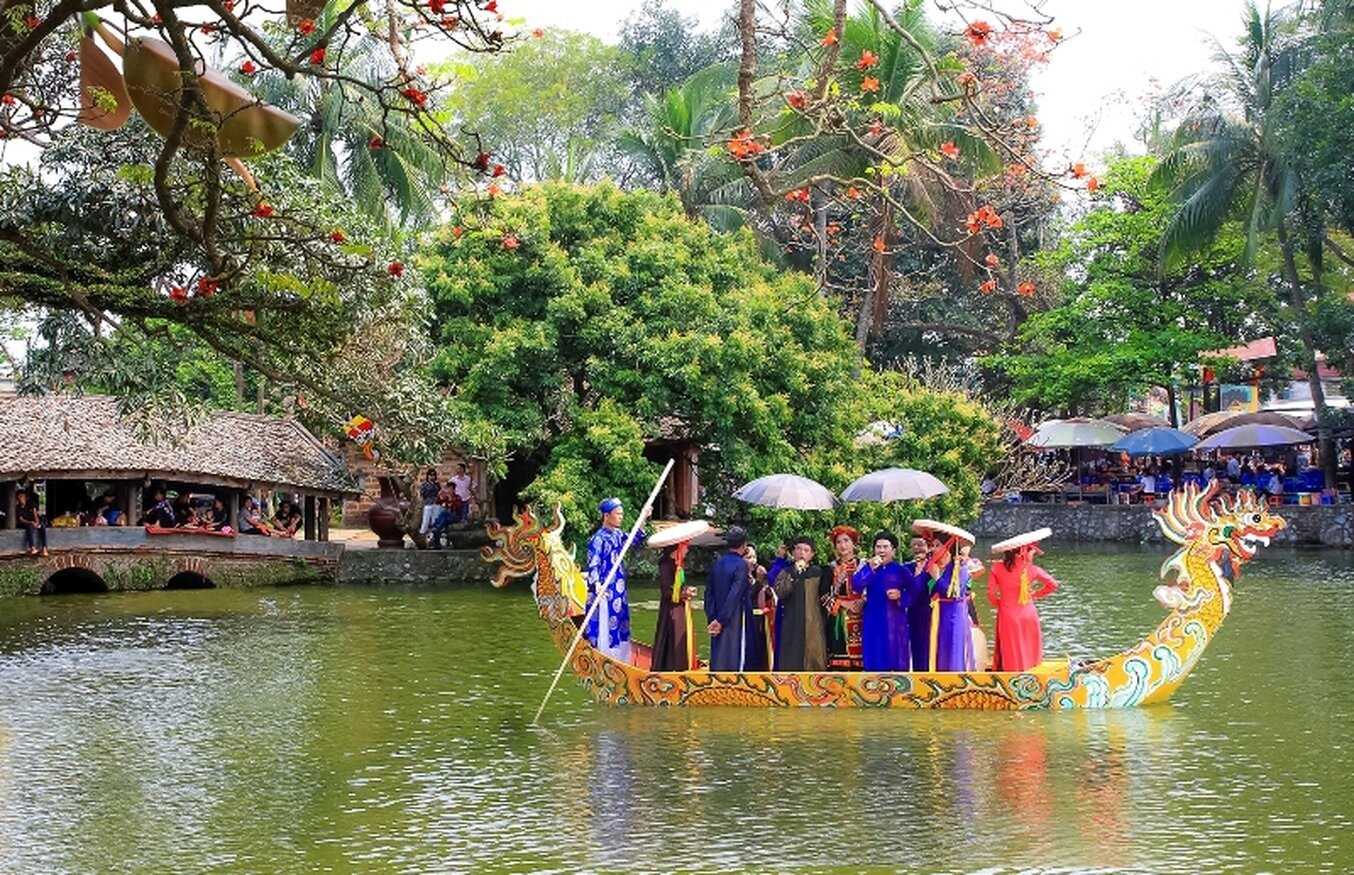
Thay Pagoda Festival
Currently, Hanoi has more than 500 pagodas and nearly 300 folk festivals, including prominent events such as the Huong Pagoda Festival, Co Loa Festival, Giong Festival, Hai Ba Trung Temple Festival, and Dong Da Mound Festival. During holidays and festivals, pagodas and communal houses are crowded with worshippers. Elegance in Hanoi religious life lies in ritual propriety. Hanoians value spiritual life and ancestor worship. Even though living spaces are often more limited than in other regions, Hanoian households still reserve a solemn place for the ancestral altar. At the beginning of the year, families often bring children to pagodas to pray for health, also instilling moral values and benevolence. Early in the year, temples and pagodas host rituals for dispelling misfortune and adverse astrological influences. On the fifteenth day of the seventh lunar month, ceremonies such as the Rite of Releasing Wandering Souls and the Vu Lan Festival of Filial Piety are held, expressing hopes for peace and good fortune.
Alongside positive aspects, religious and belief practices in Hanoi sometimes display negative tendencies. The pressures of market-oriented livelihoods can lead people to rely excessively on fate, resulting in superstition. Massive crowds visiting pagodas during festivals may negatively impact sacred spaces and surrounding environments. Phenomena such as pushing, jostling, littering, excessive burning of votive offerings, or placing money on Buddha statues detract from the refined image of Hanoians in religious life.
(To be continued…)
(1) Vũ Ngọc Khánh (2005), Kỷ yếu hội thảo Người Hà Nội thanh lịch, văn minh.